
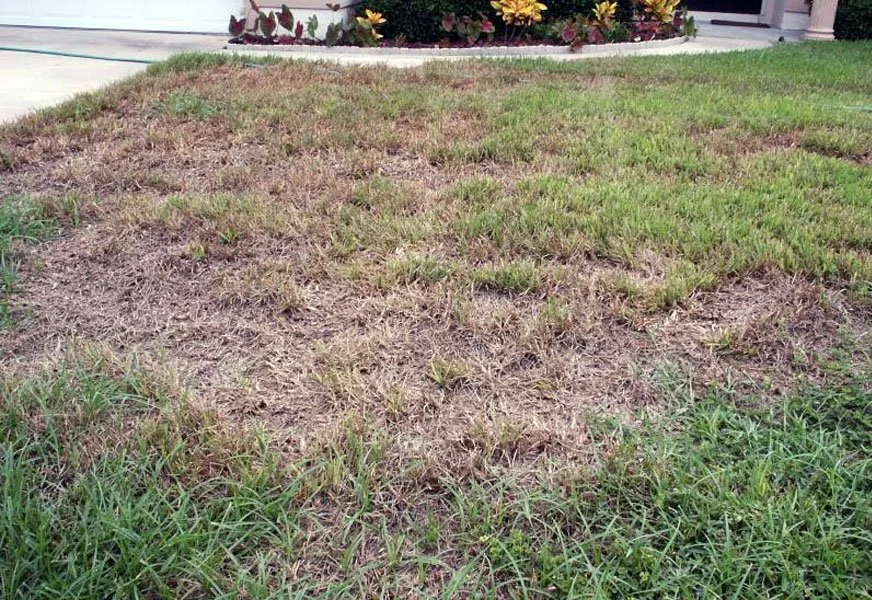
Few lawn pests move as quickly or do as much damage as chinch bugs. In the heat of a Florida summer, a small, overlooked patch of yellowing grass can spread into large dead areas within just a few weeks. By the time many homeowners realize what is happening, the grass is already too damaged to recover on its own.
The good news is that chinch bug damage is largely preventable. When you know what to watch for and act early, you can stop these pests before they kill your lawn and avoid the cost of replacing dead turf.
This guide walks through how to recognize the early signs, what to do the moment you spot trouble, and how to keep your lawn strong enough to resist chinch bugs in the first place.
What Makes Chinch Bugs So Destructive
Chinch bugs are tiny, only about an eighth of an inch long, but they cause damage far out of proportion to their size. They feed by piercing grass blades and drawing out moisture, and as they feed they inject a toxin that blocks the grass from taking up water. That double hit, moisture loss plus toxin, is why affected grass turns yellow, then brown, and stops responding to watering.
They are especially fond of St. Augustine grass, which is the most common turf type across the Treasure Coast, Central Florida, and Southwest Florida. They also reproduce quickly, producing several overlapping generations during the warm months, so populations can build from a handful of bugs to thousands in a short time.
If you want a deeper breakdown of how to identify them and confirm an infestation, our guide on chinch bugs in Florida lawns covers the float test and identification in detail. This article focuses on stopping the damage before it becomes severe.
Catch the Early Warning Signs
The single biggest reason chinch bugs kill lawns is delayed detection. Their early damage looks almost identical to drought stress, so many homeowners respond by watering more, which does nothing to stop the bugs and can even mask the problem while it spreads.
Watch for these early indicators, especially from late spring through summer:
Yellow or brown patches that appear in the sunniest, hottest parts of the lawn
Grass near sidewalks, driveways, and south-facing edges declining first
Areas that stay brown or keep spreading even after regular watering
Patches that grow larger and merge together over a week or two
Open, sunny spots are usually hit first because chinch bugs prefer hot, dry conditions. If the damage is creeping outward and watering is not bringing the grass back, treat it as a pest problem until proven otherwise.
A quick way to check
You can confirm chinch bugs with a simple float test. Cut both ends off a metal can or use a short piece of PVC pipe, push it a couple of inches into the soil at the edge of a damaged patch, and fill it with water. Within a minute or two, any chinch bugs present will float to the surface. Checking the border between green and brown grass gives the best results, since that is where active feeding is happening.
What to Do the Moment You Spot Damage
Speed matters with chinch bugs. The earlier you act, the more lawn you save. If you notice the warning signs, take these steps right away.
First, stop assuming it is a watering issue. Adjust your irrigation to make sure you are not overwatering, but do not rely on water to fix browning that is actually pest damage.
Second, isolate the problem area mentally and physically. Note where it started and how far it has spread so you can monitor whether it keeps growing.
Third, get an accurate diagnosis before treating. Chinch bug damage is easily confused with fungal disease, drought, and even fertilizer burn, and each of those calls for a completely different response. Treating for the wrong problem wastes time the lawn does not have. This is where a professional inspection pays off, because correctly identifying the cause is half the battle.
Acting within the first week or two of noticing damage is often the difference between a lawn that bounces back and one that needs costly resodding.
Why DIY Treatments Often Come Up Short
Store-bought insecticides can knock down some of the adult bugs you see, but they frequently fail to solve the real problem. Several issues get in the way:
Eggs and nymphs survive treatments aimed only at adults, so the population rebounds
Products applied at the wrong time of year miss peak activity
Granules that are not watered in correctly never reach the bugs at the soil surface
Misdiagnosis leads homeowners to treat for fungus when the issue is insects, or the reverse
Because chinch bugs produce overlapping generations, a single application rarely breaks the cycle. Without follow-up and proper timing, the survivors simply rebuild and the damage continues.
Build a Lawn That Resists Chinch Bugs
The best defense is a healthy, well-maintained lawn. Stressed grass is far more attractive to chinch bugs and far less able to recover from feeding. A few consistent habits go a long way toward prevention.
Mow at the right height. Cutting St. Augustine grass too short stresses the turf and exposes the soil to more heat, which favors chinch bugs. Keep blades higher and sharp so you are not tearing the grass.
Water deeply but not too often. Deep, less frequent watering encourages strong roots, while light daily sprinkling keeps the surface warm and dry in a way chinch bugs love. Follow any local watering restrictions for your area.
Manage thatch. A thick thatch layer gives chinch bugs shelter and binds up insecticides before they can reach the pests. Keeping thatch in check removes one of their favorite hiding spots.
Fertilize correctly. Balanced feeding keeps grass vigorous, but over-fertilizing with quick-release nitrogen can actually encourage chinch bug activity. Our look at why spring lawn fertilization matters for Florida lawns explains how to feed your turf without inviting more pests.
Getting ahead of turf problems early in the season is one of the most effective things you can do. The steps in our guide on how spring lawn care helps prevent pest problems before summer tie directly into keeping chinch bugs from gaining a foothold.
The Connection Between Lawn Damage and Other Pests
A lawn weakened by chinch bugs does not just look bad. Dead and thinning turf changes conditions around your home in ways that can invite other problems. Damaged areas hold moisture unevenly, soil shifts, and pests that were content in the yard start moving closer to the structure. We covered this chain reaction in our article on how lawn pests can become indoor pest problems, and chinch bug damage is a common starting point. Protecting your lawn is also a way of protecting your home.
Questions Florida Homeowners Ask About Chinch Bugs
How fast can chinch bugs kill a lawn?
Under hot, dry summer conditions, chinch bugs can turn green grass brown in a matter of weeks. Once a patch dies completely, the grass usually will not recover, which is why early detection is so important.
Will my lawn grow back after chinch bug damage?
It depends on how far the damage went. Grass that is yellowing but still alive can often recover once the bugs are controlled and the lawn is cared for properly. Areas that have died back to bare soil typically need to be resodded or plugged.
What time of year are chinch bugs worst in Florida?
Chinch bugs are most active during the hot months, generally from late spring through early fall. Warm, dry stretches make the damage worse and faster, so summer is when most homeowners notice problems.
Can watering my lawn get rid of chinch bugs?
No. Watering helps grass under drought stress, but it does not control chinch bugs. In fact, if you keep watering brown patches expecting them to green up, you may lose valuable time while the infestation spreads.
Is professional treatment really necessary?
Not every brown spot needs a professional, but chinch bug infestations are tricky to diagnose and treat correctly. A professional can confirm the cause, target all life stages at the right time, and protect the healthy turf around the damage, which gives your lawn the best chance to recover.
How Clements Pest Control Can Help
Chinch bugs do not go away on their own, and the longer an infestation runs, the more lawn you lose and the more it costs to put things right. Catching the problem early and treating it correctly is the surest way to keep your grass alive through the Florida summer.
At Clements Pest Control, our lawn care program is built to identify the real cause of lawn damage, treat chinch bugs at every life stage, and strengthen your turf so it can resist future outbreaks. We help homeowners across the Treasure Coast, Central Florida, and Southwest Florida with lawn care along with pest control, termite protection, rodent control, and mosquito control, so your whole property stays protected. Whether you are in Vero Beach, Port St. Lucie, Orlando, or Naples, we know the local turf and the pests that threaten it.
If you are noticing yellowing, thinning, or spreading brown patches, do not wait for the damage to take over. Call us at 772-562-6450 or contact Clements Pest Control today to schedule a lawn inspection and stop chinch bugs before they kill your lawn.