
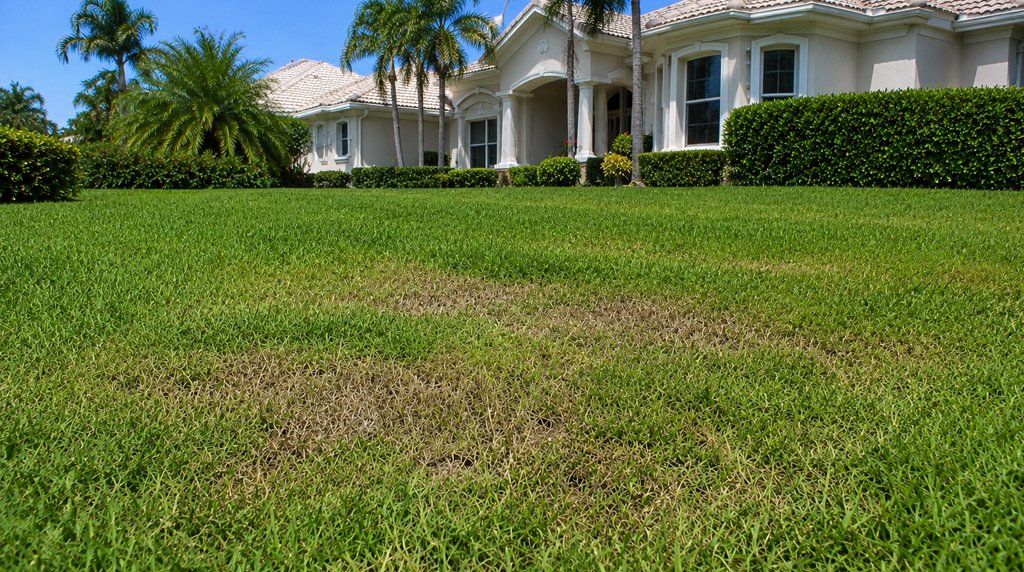
If your lawn is turning yellow or brown seemingly overnight, especially in the heat of late spring and summer, there’s a good chance you’re dealing with chinch bugs.
These tiny pests are one of the most destructive lawn insects in Florida, particularly for St. Augustine grass, which is the most common turf type across areas like Vero Beach, Port St. Lucie, Orlando, and Naples.
The problem? Most homeowners don’t realize they have chinch bugs until serious damage has already been done.
Chinch bugs are small insects that feed on grass by piercing the blades and sucking out moisture. As they feed, they also inject a toxin that prevents the grass from recovering.
Adults are about 1/8 inch long, black with white wings forming an “X”
Nymphs are smaller, red or orange with a white band
They thrive in hot, dry conditions
Signs of a Chinch Bug Infestation
The tricky part about chinch bugs is that their damage looks a lot like drought stress. But there are a few key differences.
What to look for:
Irregular yellow or brown patches in the lawn
Grass that doesn’t respond to watering
Damage starting near sidewalks, driveways, or sunny areas
Patches that spread quickly
If you’re seeing these signs, especially in St. Augustine grass, it’s time to take a closer look.
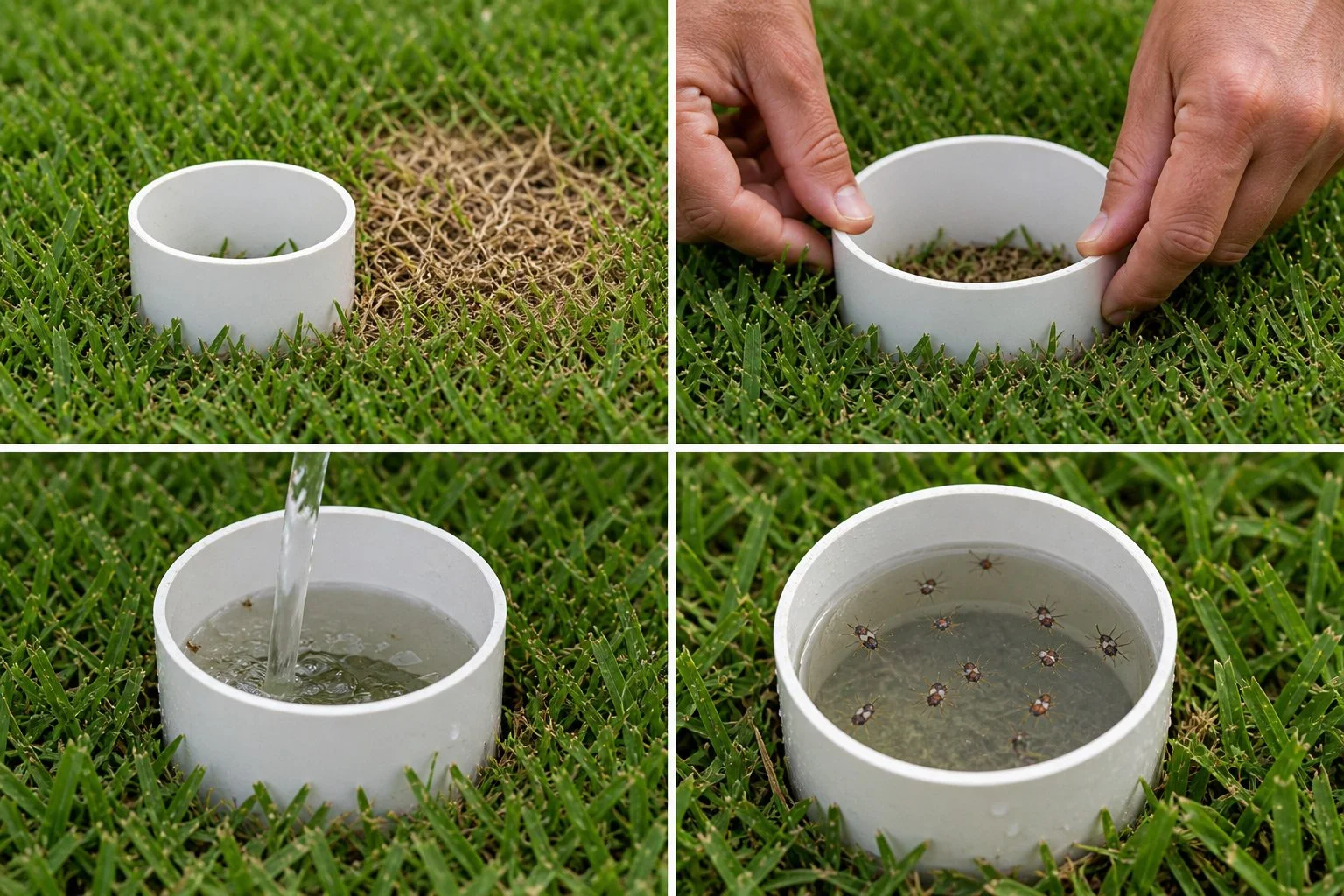
A quick field test can help confirm if chinch bugs are present:
Insert a short piece of PVC pipe (or similar cylinder) about 2 inches into the turf
Fill it with water
Wait about 60–90 seconds
If chinch bugs are present, they’ll float to the surface.
Why Chinch Bugs Are So Common in Florida
Florida’s climate creates the perfect environment for chinch bugs to thrive.
Warm temperatures nearly year-round
St. Augustine grass as the dominant turf
Periods of drought stress that weaken lawns
This is especially true across the Treasure Coast and Central Florida, where lawns can quickly go from healthy to heavily damaged in a matter of weeks.
Why DIY Treatments Often Fall Short
Store-bought treatments can sometimes kill active bugs, but they often miss the bigger issue.
Eggs and nymphs may survive
Treatments aren’t always applied at the right time
Damage may continue even after bugs are reduced
Misdiagnosis (fungus vs. insects) leads to wasted time and money
By the time most homeowners realize what’s happening, the infestation is already well established.
Professional Treatment Makes the Difference
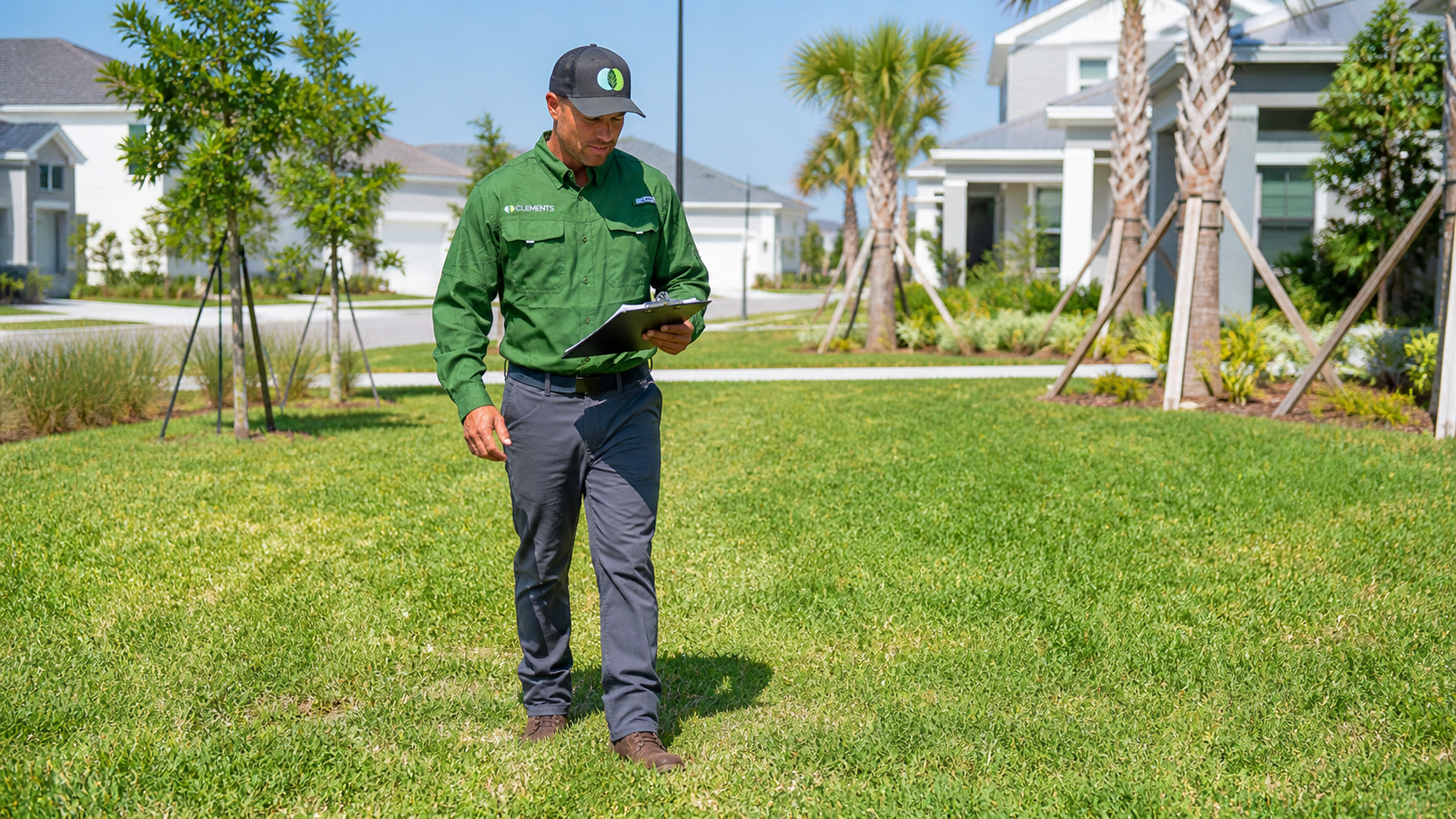
At Clements Pest Control, our lawn care program is designed to identify the problem correctly and treat it effectively the first time.
We don’t just treat the surface, we:
Confirm the presence of chinch bugs
Target all life stages
Protect surrounding healthy turf
Help prevent future outbreaks
If your lawn is showing signs of damage, it’s important to act quickly before the problem spreads.
Protect Your Lawn Before the Damage Spreads
Chinch bugs won’t go away on their own, and the longer they’re left untreated, the more expensive and difficult recovery becomes.
If you’re noticing yellowing or thinning grass, now is the time to take action.
Call us at 772-562-6450 to schedule an inspection.