
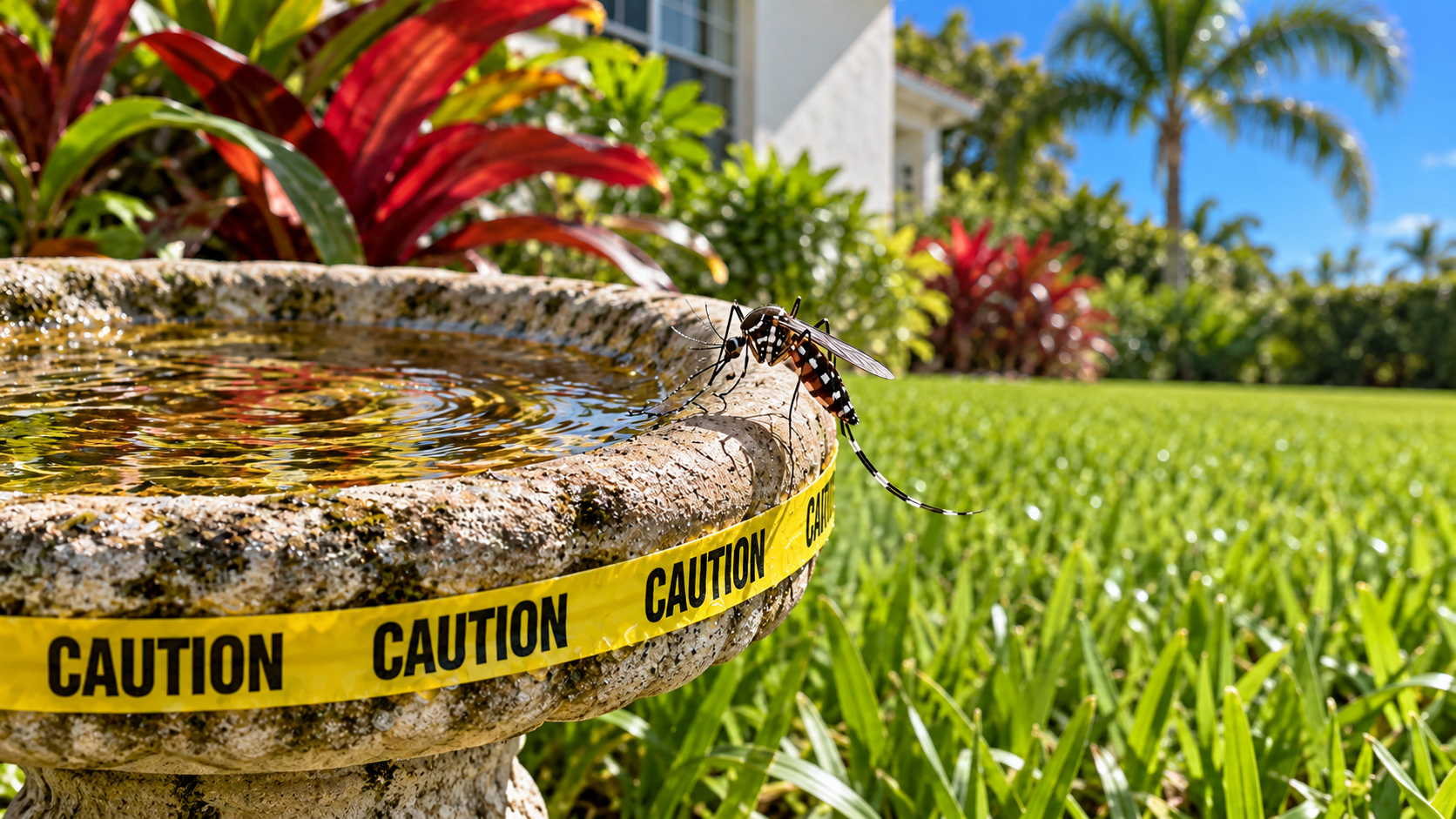
If you have seen the dengue headlines this fall, you may be wondering what it means for your household. In late September, Hillsborough, Pasco, and Pinellas counties declared local states of emergency after a rise in locally acquired cases, and the Florida Department of Health has placed several other counties under mosquito-borne illness alerts.
Health officials are taking it seriously, and that is a good thing. For homeowners, though, the useful response is understanding, not alarm. The mosquitoes that spread dengue live very differently from the swarms that rise off a marsh after a storm, and once you know how they behave, it is much clearer what you can do.
What Is Dengue?
Dengue is a virus spread by mosquito bites. Florida sees travel-related cases every year. This season stands out because more people than usual have been infected here at home.
A few basics from the CDC help put it in perspective:
It does not spread through casual contact. A mosquito picks up the virus by biting an infected person and passes it on when it bites someone else.
Most infected people never feel sick. About one in four develop symptoms, which often include fever, headache, body aches, nausea, or a rash.
A high fever after mosquito bites is worth a call to your doctor. Mention the possible exposure.
County emergency declarations are mostly practical. They let counties approve mosquito control spending faster and seek federal reimbursement, so local mosquito control districts can move quickly.
The Mosquitoes Behind Dengue
Dengue is spread mainly by two species: the yellow fever mosquito (Aedes aegypti) and the Asian tiger mosquito (Aedes albopictus). If small, dark mosquitoes with white markings bite your ankles on the patio in the afternoon, you have likely met one of them.
Three things set them apart:
They breed in containers. Instead of marshes or flooded fields, they lay eggs in small amounts of water right next to homes.
They stay close to home. According to the CDC, they usually fly only a few blocks in their lifetime. The ones biting you often hatched in your yard or a neighbor's.
They bite during the day. Many people only think about mosquitoes at dusk. These species are active in daylight, too.
That second point is good news. It means what you do around your own home has a real effect.
Why Your Yard Matters
It takes very little water. A bottle cap, plant saucer, or folded tarp can hold enough water to raise mosquitoes.
The eggs are tough. Eggs stick to the inside walls of containers just above the waterline, and the CDC notes they can survive drying out for months. A dry bucket may already hold eggs that hatch with the next rain.
The cycle is fast. In warm weather, an egg can become a biting adult in about a week to ten days.
Common breeding spots around Florida homes include:
Plant saucers and pots without drainage holes
Bromeliads, which hold water in the center of their leaves
Birdbaths and fountains that are not changed or circulating
Buckets, toys, watering cans, and wheelbarrows
Clogged gutters and tarps over boats, grills, or furniture
Pet bowls left outside
Tree holes and low spots in pool covers
None of these mean a yard is neglected. They are just part of living in a warm, rainy climate.
Everyday Habits That Help
Florida mosquito control professionals often sum up prevention as dress, defend, and dump.
Dump and scrub weekly. Walk your yard once a week and empty anything holding water. Because eggs cling to container walls, a quick scrub of birdbaths and pet bowls helps more than just tipping them out. Store buckets and toys where rain cannot reach them.
Keep your plants and décor, just manage the water. Flush bromeliads with a hose regularly, change birdbath water weekly, and skip saucers where you can.
Keep gutters flowing. Clogged gutters stay wet for days after rain. Our post on why mosquitoes spike after a Florida storm covers the post-rain timeline in more detail.
Protect your skin during the day. Long sleeves, pants, and an EPA-registered repellent used according to the label are recommended, and that applies to yard work and afternoons by the pool, not just evenings.
Keep them outside. These mosquitoes are comfortable indoors, so repair torn window, door, and lanai screens.
Work with your neighbors. Since these mosquitoes stay within a few blocks, a street that dumps standing water together sees better results than one yard alone.
Isn't the County Spraying?
During an outbreak, you may see county trucks or aircraft treating neighborhoods. That work is an important part of protecting public health. Container mosquitoes, however, breed in small spots scattered across individual yards, under shrubs and inside plants, where community treatment does not always reach. That is why health officials keep stressing what each household can do on its own property.
When to Bring in a Professional
Weekly habits go a long way. Some homeowners still want more consistent help, especially if they keep up with standing water but still get bitten, have dense shade or lots of water-holding plants, spend a lot of time on the lanai or by the pool, or have a gathering coming up.
A technician can find breeding spots that are easy to miss and treat the shaded areas where adult mosquitoes rest during the day. Our guide to mosquito misting systems, monthly sprays, and event treatments compares the options side by side.
Frequently Asked Questions
Can I catch dengue from someone who has it?
Not through everyday contact. It spreads mainly through mosquito bites, which is why avoiding bites matters, especially if someone in your home is sick.
What time of day do dengue mosquitoes bite?
Mostly during the day, though they can bite at night too.
How much water does a mosquito need to breed?
Very little. A bottle cap or plant saucer is enough, and the eggs can wait on a dry container wall for months.
Do bromeliads cause mosquitoes?
No, but they can hold water where mosquitoes lay eggs. Flushing them regularly lets you keep enjoying them.
Should I be worried about dengue?
Stay informed, but there is no need to panic. Removing standing water weekly, wearing repellent, keeping screens repaired, and calling a doctor if a high fever develops all lower your risk. The Florida Department of Health posts regular updates on mosquito-borne illness.
How Clements Pest Control Can Help
Clements Pest Control has been helping Florida families since 1961, and mosquitoes are one of the most common reasons homeowners call us. Our local teams serve homeowners across Central Florida, the Treasure Coast, and Southwest Florida.
We offer mosquito control options that include monthly mosquito service, special event sprays before a gathering, and automatic misting systems we install and maintain. A technician can walk your property, point out breeding spots, and recommend what fits your home. We also help with pest control, termite protection, rodent control, and lawn care.
Have questions about mosquitoes around your home? Contact Clements Pest Control or call (772) 562-6450.