
Mosquito activity often climbs about a week or so after a Florida storm rather than during it, because standing water left behind can start a new generation that needs roughly that long to reach biting adulthood. Heavy rain can also flush out existing larvae and knock down adults, which is part of why the first day or two feels deceptively quiet. Clements Pest Control provides mosquito control across the Treasure Coast, Central Florida, and Southwest Florida at 772-562-6450.
Every Florida homeowner has experienced this. A storm rolls through, the yard drains, and for a day or two things seem fine. Then a week later you cannot stand outside after four in the afternoon.
That delay is the most useful piece of information in mosquito control, because it means the spike is largely predictable. Mosquitoes are generally not blown in by the storm. They are produced by it, and the production process takes a fairly consistent amount of time.
How Long Does It Take Mosquitoes to Breed After Rain?
In Florida's warm season, a mosquito can go from egg to biting adult in roughly a week to ten days, though the exact timing varies with species, temperature, and conditions. Every stage in between happens in water.
That is essentially the mechanism. When a storm puts water somewhere it was not before, it starts a clock. The rain itself does relatively little. What matters is water sitting still for several days.
This is why the post-storm quiet period can be deceptive. The days right after a storm are often when the population is at its lowest, because heavy rain tends to flush larvae out of containers and knock down adult mosquitoes. What follows is a new generation emerging closer together.
What Kinds of Mosquitoes Show Up After a Storm?
Florida has dozens of mosquito species, and for practical purposes they split into two groups that behave very differently after a storm.
Floodwater mosquitoes
These lay eggs on damp soil in low areas, ditches, swales, retention basins, and marsh edges. The eggs can sit dormant for long stretches, sometimes months or longer, waiting to be submerged. When a storm floods those areas, large numbers may hatch together.
This group is generally behind the sudden clouds of mosquitoes that show up after a heavy rain event or a hurricane. They tend to be aggressive daytime biters and stronger fliers, which means they can travel a fair distance from where they hatched. That matters, because a swarm in your yard may have been produced somewhere else entirely, and no amount of yard tidying would have prevented it.
Container mosquitoes
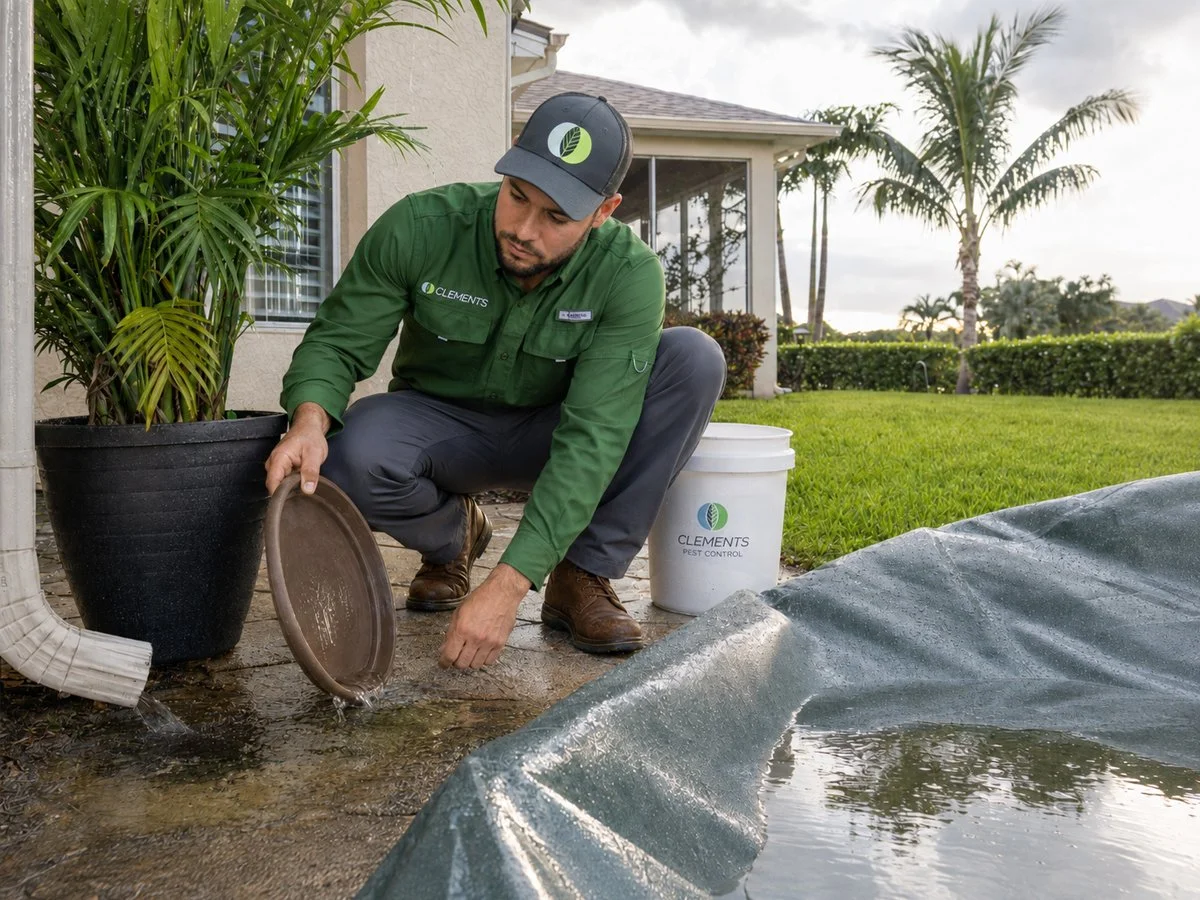
These are the ones you have the most control over. They breed in artificial containers: plant saucers, buckets, tarps, toys, tires, bromeliads, gutters, birdbaths, pool covers, boat covers, and wheelbarrows. Some need only a very small amount of water.
Container species tend to be weaker fliers and usually stay closer to where they emerged. If your yard is bad and your neighbor's is not, container breeding on your own property is often the reason. This group also includes species associated with the diseases Florida health departments monitor.
What Is the Post-Storm Mosquito Timeline?
The first day or two. Usually the fewest mosquitoes. Rain has flushed larvae out of containers and driven adults to shelter. Floodwater eggs are submerged and beginning to hatch. Not much is biting, and this is when homeowners tend to assume they got lucky.
Roughly days three to five. Larvae are developing in containers and low spots still holding water. Still quiet outdoors. This tends to be the highest-value window for action, because larvae are concentrated in water you can find and dump.
Around a week out. Adults emerge. This is typically when the yard becomes unusable and when most people start looking for help. Much of what you are dealing with was determined by what happened during the previous week.
Weeks two through four. If water is still standing, a second generation can follow the first, and newly emerged females lay their own eggs. This is where a spike can turn into a season-long problem, since a container that stays full for weeks may produce overlapping generations.
Already past that first week and losing the yard? Adults on the wing are a different job from prevention, and it is the one we handle most this time of year. Call Clements at 772-562-6450 for mosquito control treatment.
Why Are Florida Storms So Good at Producing Mosquitoes?
Four things make our storms particularly productive.
Warm water speeds development. At September water temperatures, the egg-to-adult cycle tends to run at the faster end of the range. The same rainfall in a cooler climate would generally take considerably longer to produce adults.
Debris creates new habitat. Storms fill gutters with leaves, knock over containers, leave folds in tarps and covers, and create ruts and low spots. A property can pick up a number of new breeding sites in a single afternoon.
Humidity extends adult lifespan. Mosquitoes lose water quickly in dry air. Florida's post-storm humidity can let adults live longer, which tends to mean more biting and more egg-laying per female.
Storms are followed by more storms. During the rainy season, containers often do not dry out between events, so the cycle can run more or less continuously rather than resetting.
What Should I Do After a Storm to Prevent Mosquitoes?
The first few days: the dump and drain sweep
This is likely the most valuable hour of the entire process, and it needs to happen before the adults emerge. Walk the whole property with the specific goal of finding standing water.
Flip every plant saucer, bucket, toy, wheelbarrow, and trash can lid. Empty and scrub birdbaths and pet bowls rather than topping them off, since eggs can stick to the sides. Flush the gutters, one of the most commonly missed breeding sites on a Florida home. Pull the folds out of tarps, pool covers, and boat covers. Flush bromeliads and other plants that hold water in their leaf axils. Check tire ruts and low spots in the lawn.
As a general rule, standing water left for several days can become a mosquito breeding site.
Ongoing: fix what keeps coming back
Some sites refill every time it rains. Regrade or fill persistent low spots. Correct downspouts that discharge into a puddle. Repair gutters that will not drain. Ease off irrigation during wet stretches, since overwatering keeps soil saturated and low areas full between storms. These fixes turn a recurring problem into a solved one.
Reduce resting habitat
Adult mosquitoes spend much of the day resting in cool, shaded, humid vegetation. Dense ground cover, overgrown shrubs, the shady side of the house, and thick hedges all serve as daytime shelter. Thinning and trimming that growth can meaningfully reduce how many mosquitoes are around the yard at dusk.
Protect the times you are outside
Long sleeves, EPA-registered repellent, and running fans on a patio all help, since mosquitoes are weak fliers and moving air makes it hard for them to approach. These are comfort measures rather than population control, but they matter during the peak week.
What Our Technicians Find on Post-Storm Mosquito Calls
When our technicians walk a property after heavy rain, the breeding sites they find are rarely the ones the homeowner expected. A few come up on call after call.
Gutters and downspouts. This is the site homeowners almost never check, and one of the most productive. A section of gutter holding leaves and water after a storm can be an active breeding site while the rest of the yard looks spotless.
Bromeliads and other plants that hold water. Very common in Florida landscaping, particularly in Southwest Florida. Water sits in the leaf axils between rains, and our techs regularly find larvae in them on properties where every container has already been dumped.
Corrugated drain pipe and low spots that stay wet. Buried extensions and French drains that no longer flow can hold water out of sight. Irrigation running on schedule during a wet stretch keeps low areas saturated between storms.
The neighbor's property. Technicians frequently trace pressure to a green pool, an uncovered boat, or stored containers next door. Since container species usually stay close to where they emerged, a single untreated source nearby can affect several yards.
Why Is My Yard Still Bad After I Drained Everything?
If your property is clean and the mosquitoes are still relentless, one of three things is often happening.
Floodwater species are coming in from off-site. Storm-flooded ditches, retention ponds, canals, marsh edges, and undeveloped lots can produce very large numbers, and those mosquitoes fly. In that case, little or nothing on your own property caused it.
A neighboring yard is the source. Container species generally do not travel far, so a pool that has gone green, an unused boat, or a stack of buckets next door can supply much of your yard.
Something on the property was missed. Gutters, bromeliads, corrugated drain pipe, tarp folds, and the saucers under potted plants are among the most commonly overlooked sites.
Done everything right and the yard is still unusable? That is the situation ongoing treatment is built for, since it targets resting habitat and breeding sites that source reduction alone may not reach. Our mosquito control team will walk the property with you and identify what is producing them. For homes with persistent pressure from surrounding land, some homeowners also look at mosquito misting systems as a longer-term option.
Common Questions About Post-Storm Mosquitoes in Florida
Why are there fewer mosquitoes right after a storm and more a week later?
Heavy rain tends to flush larvae out of containers and drive adults into shelter, so the first day or two is often unusually quiet. Meanwhile the water left behind can start a new generation that needs roughly a week to ten days to reach adulthood. What you feel a week later is generally that generation emerging together.
How long does the post-storm mosquito spike last?
Often two to three weeks, if the water drains and containers get emptied. If standing water persists, generations can overlap and elevated pressure may continue well into the season. That is why a dump and drain sweep in the first few days tends to matter more than anything done later.
How little water does it take to breed mosquitoes?
Very little. Some container species can complete development in the saucer under a potted plant or a similarly small amount of water. A clogged gutter section or a fold in a tarp can be more than enough to produce a significant number of mosquitoes.
Does a mosquito treatment before a storm help?
It helps with the adults present at the time, but wind and heavy rain reduce residual products and the storm creates entirely new breeding sites. Treating after the water recedes, combined with draining containers within the first few days, generally gives better results.
Is the swarm coming from my yard or somewhere else?
A rough guide: if the mosquitoes bite aggressively during the day and appeared in huge numbers all at once, they are likely floodwater species from a larger off-site area. If pressure is worst at dawn and dusk and concentrated near the house, container breeding on your property or a neighbor's is the more likely source.
Should I worry about mosquito-borne disease after a storm?
Florida health departments monitor mosquito-borne illness year-round and issue local advisories when warranted. The practical response is the same either way: reduce standing water, use repellent during peak activity, keep screens in good repair, and pay attention to advisories issued for your county.
Do bug zappers or citronella candles work?
Not meaningfully in most situations. Zappers tend to kill mostly harmless insects and relatively few mosquitoes. Citronella generally provides a small effect in a small area with little wind. Source reduction, trimming resting habitat, repellent, and fans typically do far more.
How much does mosquito control cost in Florida?
Cost depends on property size, how much vegetation needs treating, and whether you want a one-time knockdown or seasonal coverage through the rainy months. Clements quotes before any work begins. Contact Clements Pest Control and we will price it for your yard.
How Clements Pest Control Can Help
The reason post-storm mosquitoes feel unbeatable is that most people start fighting them a week too late. By the time the biting starts, the generation is already on the wing, and the only options left are treating adults and waiting it out. The homeowners who stay comfortable are the ones who walked the property in the first few days after the rain.
At Clements Pest Control, we handle both sides: finding and treating the breeding sites and resting habitat that keep producing mosquitoes, and knocking down the adults already there. We help homeowners across the Treasure Coast, Central Florida, and Southwest Florida, including Vero Beach, Stuart, Port St. Lucie, Orlando, and Naples, with mosquito control alongside pest control, termite protection, rodent control, and lawn care.
If a storm has taken your yard away from you, call 772-562-6450 or contact Clements Pest Control to get a plan in place before the next round of rain.