
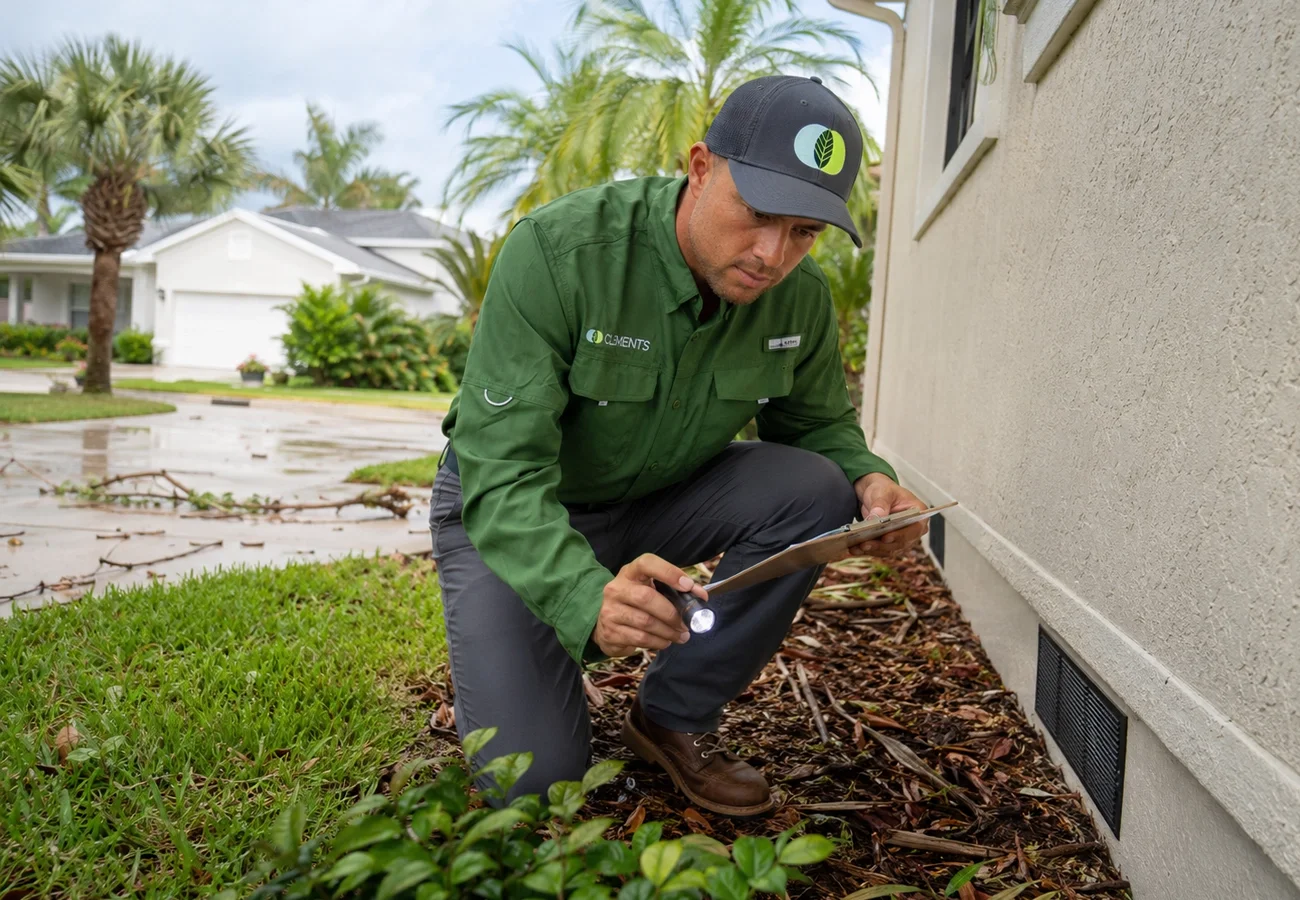
If you have lived through a Florida hurricane season, you already know the storm itself is only part of the story. The days and weeks after a hurricane bring their own set of problems, and one of the most overlooked is pests. Flooding, downed trees, standing water, and structural damage all combine to push rodents, ants, mosquitoes, and other pests straight toward your home.
The good news is that a little preparation goes a long way. Knowing what to do before the storm and how to respond afterward can save you from a frustrating infestation on top of everything else a hurricane leaves behind. Here is what every Florida homeowner should know.
Why Hurricanes Make Pest Problems Worse
Pests are survivors. When a storm floods their natural habitats and destroys their nesting sites, they do exactly what any living thing would do: they look for higher, drier ground with food and shelter. Your home fits that description perfectly.
Heavy rain saturates the soil, forcing ants and other ground-dwelling insects up and out. Floodwaters push rats and mice out of burrows and toward buildings. Standing water that lingers after the storm becomes a breeding ground for mosquitoes. And any new gaps in your roof, siding, or foundation give all of these pests an easy way in.
In other words, the conditions a hurricane leaves behind (moisture, damage, and displacement) are close to ideal for a pest invasion. Understanding that connection is the first step to preventing it.
Common Pests to Watch for After a Storm
Rodents
When floodwaters rise, rats and mice abandon their ground nests and head for dry shelter. That migration often leads indoors, into attics, wall voids, garages, and crawl spaces. Rodents chew wiring, contaminate food, and reproduce quickly, so a couple of storm refugees can become a real problem within weeks. This is where professional rodent control makes a difference, because sealing the entry points matters as much as removing the rodents themselves.
Mosquitoes
Mosquitoes are one of the most predictable post-hurricane pests. Many species lay eggs in stagnant water, and a storm leaves plenty of it behind in clogged gutters, buckets, tarps, tires, and low spots in the yard. Within about a week and a half, that standing water can produce a new swarm, which is why mosquito control becomes so important during recovery.
Ants
Saturated soil creates underground flooding that drives ants out of their nests. Fire ants are especially notorious in Florida, forming floating rafts on floodwater and moving as a colony until they reach dry land, which may be your patio, garage, or living room.
Termites and Other Wood-Destroying Pests
Excess moisture and water-damaged wood are magnets for termites. Damp framing, wet drywall, and soggy debris give them exactly the environment they thrive in, which is why hurricane recovery is a smart time to keep an eye out for termite activity and to make sure your termite protection is up to date.
Before the Storm: Your Pest Prep Checklist
Preparing for pests before a hurricane is really about sealing up your home and removing the things that attract them. Tackle these tasks while the weather is still calm.
Seal entry points around your home. Walk the exterior and look for gaps around pipes, vents, utility lines, doors, and windows. Even a small opening is an invitation to rodents and insects once the storm pushes them your way.
Clear your gutters and drains. Clogged gutters overflow and create the standing water mosquitoes love. Clean them out so water can move away from your home instead of pooling.
Store food and trash securely. Move pantry items into sealed containers and make sure outdoor trash cans have tight lids. Food odors draw rodents and ants, especially when their usual food sources are wiped out.
Bring in or secure clutter. Firewood, cardboard, potted plants, and yard debris all make great pest shelters. Store what you can indoors or in sealed bins, and move woodpiles away from exterior walls.
Trim back landscaping. Branches and shrubs touching your house act as bridges for ants, rodents, and other pests. Trimming them before the storm reduces easy access points. Keeping up with routine lawn care also helps, since a healthy, well-maintained yard is less inviting to pests. In warmer, humid areas like Naples and Southwest Florida, where lawns often need treatment every six to eight weeks, staying on top of Naples lawn care matters even more heading into storm season.
Schedule a pre-season pest treatment. A professional barrier pest control treatment before hurricane season gives your home a head start, making it far less hospitable to the pests trying to move in after a storm.
After the Storm: How to Recover and Keep Pests Out
Once it is safe to assess your property, pest prevention becomes part of your cleanup routine. Move through these steps as you get your home back in order.
Eliminate standing water quickly. This is the single most important thing you can do to prevent mosquitoes. Empty buckets, flowerpots, tarps, kiddie pools, and anything else holding water. Check gutters and low spots in the yard, and drain them as soon as possible.
Inspect for new damage and gaps. Storms open up new entry points. Check your roof, soffits, siding, screens, and foundation for cracks, holes, and missing pieces. Seal or cover any openings until permanent repairs can be made.
Remove debris and wet materials. Piles of soggy vegetation, waterlogged cardboard, and damaged wood are prime pest habitat. Clear them out promptly, and dispose of any water-damaged materials that could invite termites or rodents.
Watch for signs of pests indoors. Droppings, gnaw marks, mud trails, or an uptick in insect sightings all point to displaced pests settling in. Catching the problem early makes it much easier to handle.
Keep food and garbage sealed during cleanup. Recovery can be chaotic, and it is easy to let trash pile up. Staying disciplined about sealed food and covered garbage denies pests the fuel they are searching for.
Call for professional help if you spot an infestation. If pests have already moved in, a professional inspection and treatment will address the problem at the source rather than just the symptoms you can see.
Frequently Asked Questions
Why are there so many bugs after a hurricane in Florida?
Hurricanes flood the ground and destroy the natural habitats pests rely on. Displaced insects and rodents move toward dry shelter and food, which usually means nearby homes. Standing water left behind also fuels a rapid increase in mosquitoes.
How long after a hurricane do mosquitoes come back?
Mosquitoes can rebound fast. Eggs laid in the standing water a storm leaves behind can develop into a new swarm in roughly a week to ten days, which is why draining standing water right away matters so much.
Should I get pest control before or after a hurricane?
Both help. A treatment before hurricane season makes your home less inviting to pests trying to move in after a storm, while a post-storm inspection catches any pests that slipped through and addresses new vulnerabilities in your home.
Do hurricanes cause termite problems?
They can. The excess moisture, water-damaged wood, and soggy debris a hurricane produces create ideal conditions for termites. It is worth watching for termite activity during and after your recovery, especially if any wood in or around your home stayed wet.
How Clements Pest Control Can Help
Hurricane season is stressful enough without adding a pest problem to the list. At Clements, we help Florida homeowners stay ahead of the pests that storms push toward their homes, from rodents and ants to mosquitoes and termites, and we can help your yard recover with dependable lawn care too.
Whether you want a protective treatment before the next storm or an inspection to deal with pests that moved in after one, our local team knows Florida homes and Florida pests. If you are dealing with a post-storm pest concern or simply want to prepare for the season ahead, contact Clements Pest Control to schedule a visit and protect your home.