
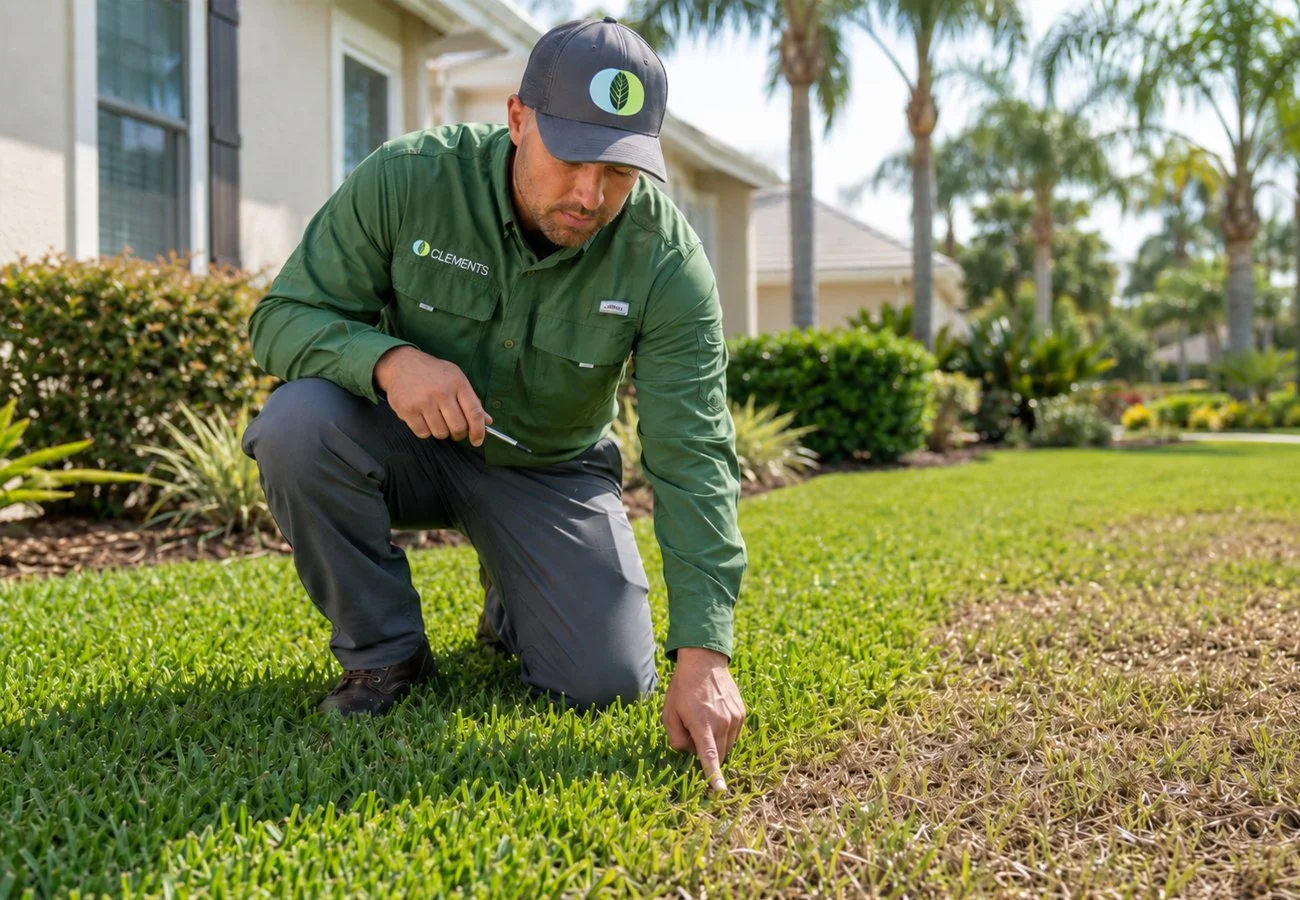
If you have ever walked outside to find a green, healthy lawn suddenly turning brown in patches, you may have met one of Florida's fastest-moving lawn pests. Fall armyworms feed in large numbers and can chew through a yard in a day or two. By the time most homeowners notice, the caterpillars have already moved on to the next section of grass.
The good news is that armyworm damage is preventable and treatable once you know what to look for. Below we break down how these pests work, the early warning signs, and the steps you can take to keep your Florida lawn healthy.
What Are Fall Armyworms?
Fall armyworms are the caterpillar stage of a brown moth. The caterpillars are the ones that cause the trouble. They range in color from light green or pink to a darker yellow-brown, with stripes running down the body and a netlike pattern on the head. As they grow, their appetite grows with them, and the largest caterpillars do the most damage right before they stop feeding.
The adult moths are brown with white-tipped front wings and a wingspan of about an inch and a half. You may notice them fluttering around porch lights or landscape lighting at night. Those moths lay eggs in and around your yard, and a single wave of hatching caterpillars can number in the hundreds.
Despite the name "fall" armyworm, these pests are not limited to autumn. In Florida's warm climate they can show up in spring, summer, and fall, with activity often peaking in the warmer, wetter months.
Why They Cause Damage So Fast
Armyworms get their name from the way they move. They feed together in large groups and advance across a lawn like an army, stripping the grass as they go. A section of turf that looked perfectly healthy in the morning can look scalped by the following day.
Two things make them especially destructive in Florida:
They arrive in huge numbers. Because so many caterpillars hatch at once, the feeding damage adds up quickly across a wide area.
They feed fast and then leave. Older caterpillars eat the most, so by the time the brown patches appear, the worst of the feeding is often already happening or nearly finished. That is why so many homeowners feel like the damage appeared overnight.
Early Warning Signs on a Florida Lawn
Catching armyworms early is the difference between a quick treatment and a costly repair. Watch for these signs:
Brown or scalped patches spreading across the lawn
Early feeding can look like drought stress or wilting. As it worsens, the grass takes on a chewed, scorched, or scalped appearance, with only the stems left behind. The damage tends to be uniform across a large area rather than scattered spots.
Birds gathering on your lawn
If you notice more birds than usual pecking at your grass, they may be feeding on caterpillars. A sudden increase in bird activity is often one of the first clues that something is living in your turf.
Moths around lights at night
Brown moths near outdoor lighting can signal that egg-laying is underway. Seeing them does not guarantee an infestation, but it is a good reason to start checking your lawn closely.
The soap test
This is the simplest way to confirm armyworms. Mix about a tablespoon of liquid dish soap into a gallon of water and pour it over a four-foot by four-foot area near the damaged grass. If armyworms are present, the soap irritates them and they crawl to the surface within a few minutes.
What to Do If You Find Armyworms
If your soap test brings caterpillars to the surface, act quickly. The larger they get, the harder they are to control and the more grass they consume.
Because timing and product selection matter so much, many Florida homeowners choose to have a professional handle armyworm outbreaks. A proper Clements lawn care program can catch problems early and treat them before the damage spreads.
Can a Lawn Recover From Armyworms?
In most cases, yes. Armyworms feed on the grass blades but usually do not kill the roots or crowns of established, healthy turf. With good care, many lawns green back up within a couple of weeks.
Recovery is faster when the lawn was healthy to begin with. Grass that is already stressed by drought, poor soil, or improper mowing takes longer to bounce back and is more vulnerable to repeat damage. The same is true with other turf pests, so if you have battled chinch bug damage in the past, you already know that a strong, well-maintained lawn is the best defense. This is one more reason that consistent lawn care pays off long before a pest ever shows up.
How to Prevent Armyworms
You cannot stop moths from flying into your yard, but you can make your lawn less inviting and catch problems sooner:
Keep your lawn healthy and well fed. A dense, vigorous lawn recovers from feeding far better than a thin, stressed one.
Mow and water correctly for your grass type. Florida lawns of St. Augustine, Bahia, Zoysia, and Bermuda each have their own needs, and proper care keeps the turf strong.
Scout regularly during the growing season. A quick walk across the lawn every week, especially in the warm months, helps you spot the first brown patches before they spread.
Consider a routine lawn care program. Ongoing monitoring means someone is watching for early signs so a small problem never becomes a 48-hour disaster.
How Clements Pest Control Can Help
Armyworms move quickly, and by the time the brown patches show up, the clock is already running. That is where a trusted local team makes a difference. Clements Pest Control helps Florida homeowners keep their lawns healthy through routine lawn care, early pest monitoring, and fast treatment when problems appear. Homeowners on the Treasure Coast can lean on our Vero Beach lawn care team, who know exactly how local grasses respond to pests like armyworms.
Beyond lawn care, Clements also helps homeowners with pest control, termite protection, rodent control, and mosquito control, so your whole property stays protected through every Florida season. Our team knows the local grasses, the local pests, and the timing that matters most here.
FAQ’s
-
An armyworm is the caterpillar stage of a brown moth, and the caterpillar is the stage that damages lawns. Fall armyworm caterpillars range from light green or pink to yellow-brown, with stripes down the body and a distinctive netlike or inverted "Y" pattern on the head. The adult moth is brown with white-tipped front wings and a wingspan of about an inch and a half.
-
A large armyworm infestation can cause visible damage in as little as one to two days. Because the caterpillars feed together in large groups and the biggest caterpillars eat the most right before they stop feeding, the browning often seems to appear almost overnight.
-
Early signs include brown or scalped patches that spread uniformly across a wide area rather than in scattered spots, a sudden increase in birds pecking at the grass, and brown moths gathering around outdoor lights at night. Early feeding can look like drought stress before the grass takes on a chewed, scorched appearance.
-
Mix about one tablespoon of liquid dish soap into one gallon of water and pour it over a four-foot by four-foot area near the damaged grass. If armyworms are present, the soap irritates them and they crawl to the surface within a few minutes. This is the simplest at-home way to confirm an infestation.
-
Despite the name "fall" armyworm, these pests are not limited to autumn in Florida. They can appear from spring through fall, with activity often heaviest in the warmer, wetter months. Florida homeowners should scout throughout the entire growing season rather than only in autumn.
-
Products containing Bacillus thuringiensis (Bt) or spinosad are effective and gentler options for home lawns, and certain pyrethroid-based insecticides also work. Bt is most effective on smaller, younger caterpillars, so timing matters. Treat in the early evening when armyworms feed most actively, then water and mow properly so the grass can recover.
-
In most cases, yes. Armyworms feed on the grass blades but usually do not kill the roots or crowns of established, healthy turf, so many lawns green back up within a couple of weeks. Recovery is faster when the lawn was healthy to begin with; grass already stressed by drought, poor soil, or improper mowing takes longer and is more vulnerable to repeat damage.
-
No. Armyworms are not dangerous to people or pets. They are a threat to grass, not to your family. Still, follow label directions on any lawn treatment and keep pets off freshly treated areas until it is safe.
-
New moths can lay fresh eggs, leading to another wave of caterpillars later in the season, so prevention matters. Keep the lawn healthy and well fed, mow and water correctly for your grass type (St. Augustine, Bahia, Zoysia, or Bermuda), and scout the lawn weekly during the warm months. A routine lawn care program provides ongoing monitoring so a small problem never becomes a 48-hour disaster.
-
Clements Pest Control offers lawn care and armyworm treatment for homeowners across Florida, including a dedicated Vero Beach and Treasure Coast lawn care team that knows how local grasses respond to pests like armyworms. Clements also provides pest control, termite protection, rodent control, and mosquito control.
If you have noticed brown patches spreading across your yard, or you simply want to protect your lawn before armyworms strike, contact Clements Pest Control today to schedule service or ask about a lawn care program built for Florida homes.