
If you live in Florida, you have almost certainly crossed paths with a cockroach at some point. They are part of life in a warm, humid state, especially once the summer rains arrive. But here is something many homeowners do not realize: the roach scurrying across your kitchen counter and the one flying toward your porch light may be two completely different pests, with completely different habits.
Two of the most commonly confused are tropical roaches and German roaches. They can look surprisingly similar at a glance, yet where they live, how they get inside, and how you control them are not the same at all. Knowing the difference helps you respond the right way instead of wasting time and money on the wrong approach.
In this guide we will break down how to tell these roaches apart, why the distinction matters for your home, and the practical steps you can take to keep both out. We will also share some Florida-specific tips, since our climate plays a big role in why roaches thrive here.
The Short Answer: How They Differ
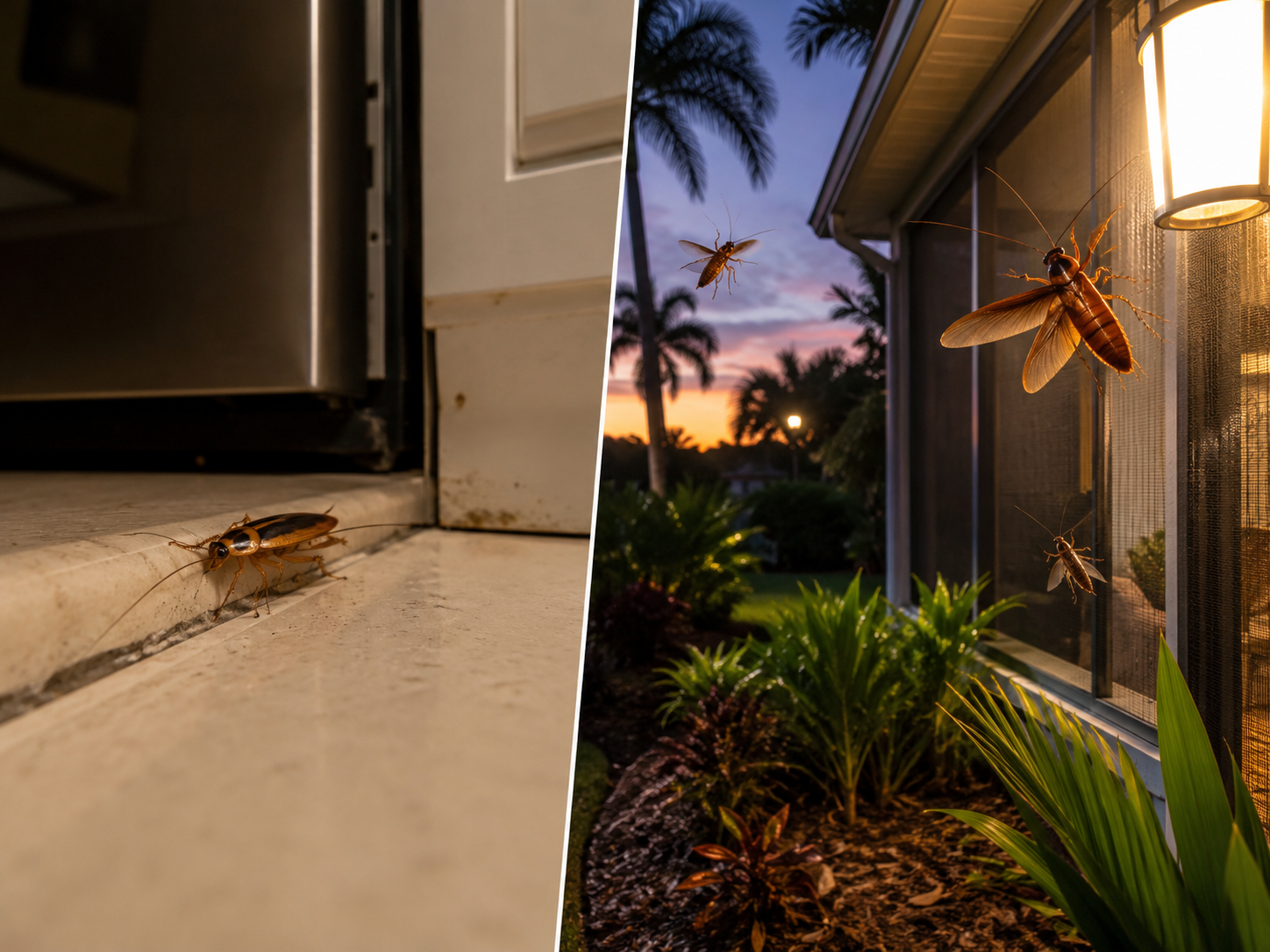
If you remember one thing, make it this. German roaches are indoor pests that breed inside your home and prefer to stay hidden in dark, tight spaces. Tropical roaches are outdoor pests that live in your landscaping and fly toward lights, sometimes ending up indoors by accident.
Here is a side by side comparison to make the differences clear.
Size: German roaches are about half an inch long and slender, while tropical roaches are half an inch to over an inch depending on the species.
Color: German roaches are light brown to tan with two dark stripes behind the head, while tropical roaches are tan, reddish brown, or pale green depending on the species.
Flying: German roaches are winged but rarely fly, while tropical roaches are strong, active fliers.
Light: German roaches are drawn to dark cracks and avoid light, while tropical roaches are strongly attracted to light.
Where they live: German roaches are found indoors in kitchens and bathrooms, while tropical roaches are found outdoors in mulch, leaf litter, and lawns.
How they get in: German roaches are hitchhike on bags, boxes, and used appliances, while tropical roaches are fly in through doors, windows, and gaps at dusk.
Understanding German Roaches
The German cockroach is one of the most troublesome pests a Florida homeowner can face, and not because it is large or dramatic. It is small, fast, and incredibly good at hiding and reproducing. A single female and her offspring can produce hundreds of roaches in a matter of months, which is why a minor sighting can turn into a serious problem quickly.
What German Roaches Look Like
German roaches are small, usually about half an inch long, with a light brown to tan body. The easiest way to identify one is the pair of dark parallel stripes running just behind the head. They have wings but are poor fliers, so you will almost always see them running rather than flying.
Where You Will Find Them
These roaches want to be indoors, close to food, warmth, and moisture. Kitchens and bathrooms are their favorite spots. Look for them behind refrigerators, under sinks, inside cabinet hinges, around dishwashers, and in the cracks behind baseboards. Because they avoid light, you may only notice them when you flip on a light at night and catch a few scattering for cover.
Why They Are a Concern
German roaches are linked to allergens and asthma triggers, and they can contaminate food and surfaces as they travel through your home. Their rapid breeding makes them difficult to eliminate with store bought sprays alone. Treating the few you see rarely solves the problem, because the rest of the population is tucked away out of sight. You can read more about how these pests behave and why they are so hard to control in our guide to cockroach control in Florida, and it is one of the situations where professional pest control genuinely makes a difference.
Understanding Tropical Roaches
Tropical roaches is a broader term that covers several outdoor loving species that thrive in Florida's heat and humidity. The Asian cockroach is the one most often mistaken for the German roach because the two look almost identical. Other tropical species you may encounter include the Cuban cockroach, which is pale green, and various wood and palmetto type roaches that live outdoors.
What Tropical Roaches Look Like
Appearance varies by species. The Asian cockroach is tan and about the same size as a German roach, which is exactly why people mix them up. Cuban roaches are a distinctive light green. What ties tropical roaches together is not their looks but their behavior. They are strong fliers and they are drawn to light, so you will often see them buzzing around porch lights, gliding toward windows, or landing on screens after dark.
Where You Will Find Them
Tropical roaches live outside. Their home is your mulch beds, leaf litter, ground cover, palm trees, and shaded landscaping. They are most active in the evening and during Florida's warm, rainy months. When they get indoors, it is usually by flying in through an open door, a torn screen, or a gap around a window, not because they want to nest inside.
Why They Are a Concern
Tropical roaches are more of a nuisance than a health threat, but a nuisance at scale can feel overwhelming. Because they are attracted to light, they tend to gather near entryways, lanais, and pool cages in large numbers on summer evenings. A few flying roaches around the porch can quickly become dozens, and some inevitably make it inside when doors open and close.
Why the Difference Matters
Telling these roaches apart is not just a matter of curiosity. It changes how you should respond.
If you are dealing with German roaches, the focus is on the inside of your home. You need to find and treat the hidden harborage areas where they breed, seal off the cracks they hide in, and remove the food and moisture that sustain them. Outdoor spraying does very little for an indoor breeding problem.
If you are dealing with tropical roaches, the focus shifts outdoors. The goal is to manage the landscape conditions that attract them, reduce the lighting that draws them toward your home, and keep them from slipping inside. Treating only the indoors will not stop a population that lives in your yard.
Misidentifying the problem is one of the most common reasons homeowners feel like their efforts are not working. The treatment was simply aimed at the wrong place.
The Florida Factor: Why Roaches Love It Here
Florida gives both of these pests close to ideal conditions. Year round warmth means roaches never get a hard winter freeze to knock back their numbers. High humidity provides the moisture they need to survive. And the summer rainy season, which is in full swing by July, pushes outdoor roaches toward the drier shelter of homes and structures.
In Southwest Florida, communities around Naples and the surrounding region see this clearly. Lush tropical landscaping, abundant mulch, screened lanais, and pool cages create the perfect mix of habitat and lighting that tropical roaches are drawn to. At the same time, the warm indoor environments of homes throughout the state give German roaches everything they need to thrive once they get a foothold. If you are local, our Naples pest control team sees both of these roaches all summer long.
This is why a layered approach that addresses both the inside and the outside of your home tends to work best in our climate.
Practical Tips to Keep Both Roaches Out
While the two pests call for different strategies, good home habits help with both. Here are practical steps Florida homeowners can take.
For German Roaches (Indoor Focus)
Keep kitchen counters, floors, and sinks clean and free of crumbs and grease.
Store food in sealed containers and take out the trash regularly.
Fix leaky faucets and pipes, since roaches are drawn to moisture.
Inspect grocery bags, cardboard boxes, and secondhand appliances before bringing them inside, as German roaches often hitchhike.
Seal cracks and gaps around cabinets, baseboards, and plumbing.
For Tropical Roaches (Outdoor Focus)
Keep mulch and leaf litter pulled back a few inches from your foundation.
Trim shrubs, palms, and ground cover so they are not touching the house.
Switch exterior bulbs to yellow or LED lights that are less attractive to flying insects.
Repair torn window and door screens, and keep doors closed during evening hours.
Reduce standing water and improve drainage in landscape beds, which also helps with mosquito control during the rainy season.
A healthy, well maintained yard is one of your best defenses against outdoor pests, which is why thoughtful lawn care and landscaping go hand in hand with keeping tropical roaches at bay. For more seasonal pest tips, our Clements blog covers common Florida problems throughout the year.
How Clements Pest Control Can Help
Whether you are seeing roaches scatter across the kitchen at night or flying toward your lanai on a warm evening, the right solution starts with correctly identifying the pest. That is where having a knowledgeable local team matters.
At Clements Pest Control, we help Florida homeowners deal with all kinds of roaches and the conditions that attract them. Our technicians know the difference between an indoor German roach problem and an outdoor tropical roach issue, and we build treatment plans that target the actual source rather than just the roaches you happen to see. Beyond roaches, we also help families across Florida with termite protection, rodent control, mosquito control, and lawn care, so your home stays comfortable and protected year round.
If roaches have you frustrated this summer, you do not have to figure it out alone. Contact Clements Pest Control for a thorough inspection and a plan built for your home and your Florida landscape. Reach out today to schedule your service and get back to enjoying your home.
Frequently Asked Questions
How can I tell if I have German roaches or tropical roaches?
Watch their behavior. If the roaches are running and hiding indoors, especially in the kitchen or bathroom, and they avoid light, they are likely German roaches. If they are flying, gathering around lights, and seem to come from outside, they are likely tropical roaches.
Do tropical roaches infest homes like German roaches do?
Generally no. Tropical roaches prefer to live outdoors in landscaping and usually only come inside by accident, often by flying in. German roaches actively breed indoors, which is what makes them harder to control once established.
Why do I suddenly see flying roaches around my porch at night in summer?
Those are most likely tropical roaches, such as Asian cockroaches. They are strong fliers attracted to light, and they become very active during Florida's warm, rainy summer months. Outdoor lighting near doors and lanais tends to draw them in.
Will store bought sprays get rid of German roaches?
Surface sprays may kill the roaches you see, but German roaches breed in hidden areas and reproduce quickly, so sprays alone rarely solve the problem. A targeted professional treatment that reaches their harborage areas is usually needed.
Are roaches worse in certain parts of Florida?
Roaches thrive throughout Florida thanks to the heat and humidity. Areas with heavy tropical landscaping, like much of Southwest Florida, can see more outdoor flying roaches, while German roaches can be a concern in homes anywhere in the state.