Whether you need professional cockroach control in Florida usually depends less on how many roaches you have seen and more on which species you are dealing with. Outdoor roaches that wander in from the landscape can often be managed with sealing, moisture control, and exterior treatment. German cockroaches, which live and breed entirely indoors, rarely resolve without professional treatment. Clements Pest Control identifies the species and treats accordingly for homeowners across the Treasure Coast, Central Florida, and Southwest Florida at 772-562-6450.
Most articles on this question give you a list of warning signs and leave it there. The trouble is that the same sign can mean very different things depending on what is actually in your house. Two roaches in the garage in July may be nothing. Two roaches behind the coffee maker may be the visible edge of a population of several hundred.
So before the signs, start with the species. In Florida, that single question does more to answer "do I need help" than anything else.
Which Cockroach Do You Actually Have?
Florida is home to several roach species, and for practical purposes they fall into two camps that behave very differently.
Outdoor roaches that wander in
American cockroaches, which most Floridians call palmetto bugs, along with smokybrown, Australian, and Asian cockroaches, live outside. They shelter in mulch, palm boots, leaf litter, sewer and drain systems, tree holes, and woodpiles. They come indoors when conditions push them, which in Florida usually means heat, heavy rain, flooding, or drought.
These are typically large, often an inch and a half or more, reddish brown, and frequently seen alone. They tend to turn up in garages, bathrooms, laundry rooms, and around drains rather than deep inside cabinets.
The important part: a palmetto bug in your bathroom generally did not hatch in your bathroom. It came from outside. That makes it a sealing and perimeter problem, and it is often something a motivated homeowner can get on top of.
German cockroaches that live indoors
German cockroaches are a different animal entirely. They are small, roughly half an inch, light brown, with two dark stripes running behind the head. They do not live outdoors in Florida in any meaningful way. They live inside structures, and they got there by being carried in, usually in cardboard, grocery bags, appliances, secondhand furniture, or luggage.
They reproduce quickly, they hide in places you cannot reach, and they are the species most likely to develop resistance to over-the-counter products. Our guide to German roaches in Florida kitchens covers why they behave so differently from the roaches most Floridians grew up with.
If you are seeing small striped roaches in the kitchen or bathroom, particularly at night when you turn on a light, that is the answer to the question in this article's title. German cockroach infestations rarely resolve on their own or through retail products, and the population grows while you experiment. Our pest control team treats these regularly and can confirm the species before anything is applied.
When Can I Handle a Roach Problem Myself?
You have a reasonable shot at handling it yourself when most of the following are true.
The roaches are large and reddish brown rather than small and striped. You are seeing them occasionally rather than routinely. Sightings cluster around the garage, lanai, bathroom drains, or laundry area rather than the kitchen. You have not found droppings or egg cases inside cabinets. Nobody in the house is experiencing worsening allergy or asthma symptoms. And you have a plausible entry point you can actually fix, such as a failed door sweep, an unsealed pipe penetration, or mulch piled against the foundation.
In that situation, the work is mostly exclusion and moisture reduction. Seal gaps around doors, pipes, and utility penetrations. Fix leaks under sinks and around water heaters. Pull mulch and dense plantings back from the foundation. Keep gutters flowing. Address any standing water. Store food and pet food in sealed containers, and take the trash out consistently.
Those steps address the conditions that brought them in, which is a more durable fix than spraying the ones you see.
What Are the Signs I Need Professional Cockroach Control?
Some situations rarely resolve without help. These are the ones that tend to signal a population rather than a visitor.
You are seeing small, striped roaches
As covered above, this generally means German cockroaches, and that is the clearest single indicator on this list. Species matters more than count.
You see roaches during daylight hours
Roaches are usually nocturnal. Daytime sightings can indicate a larger population or increased pressure on hiding spaces, though a single daytime roach after a storm or a flooded landscape bed may just be displacement.
You find droppings or egg cases
Droppings from smaller species look like coarse ground pepper or dark specks, often along the inside edges of cabinets, in drawer corners, or behind appliances. Egg cases are small brown capsules, roughly a quarter inch for German cockroaches. Finding either inside living space suggests they are breeding there rather than passing through.
There is a persistent musty odor
Larger populations can produce a noticeable musty or oily smell, particularly in enclosed spaces like cabinets under a sink. If you smell it before you see anything, the population is likely well established.
Store-bought products stopped working
If sprays or bait stations worked at first and then did not, that pattern is worth taking seriously. It can reflect resistance, bait aversion, or simply that the products are only reaching a small fraction of the population.
They keep coming back after every cleanup
Roaches that return within days of a thorough cleaning usually indicate harborage you have not found, often inside wall voids, under cabinet toe kicks, behind dishwashers, or inside appliance motor housings.
Sightings are spreading to new rooms
A problem contained to the kitchen that starts appearing in bathrooms or bedrooms is expanding. That usually means the original harborage is crowded.
Someone in the house has worsening allergy or asthma symptoms
Cockroach allergens are a recognized asthma trigger, particularly for children. If symptoms track with roach activity in the home, that raises the priority regardless of how many you are seeing.
If several of these describe your situation, the useful next step is identification rather than another product. Call Clements at 772-562-6450 and we will confirm what species you have and what it will take.
Why Do DIY Sprays Sometimes Make Roach Problems Worse?
This is the part homeowners are rarely told, and it explains a lot of frustrating outcomes.
Repellent sprays can scatter a population. Many over-the-counter aerosols are designed to repel as well as kill. Applied to a harborage area, they can push roaches deeper into wall voids or into adjacent rooms, turning one concentrated problem into several dispersed ones.
Sprays can contaminate bait. Professional roach control leans heavily on baits, which work because roaches eat them and carry the effect back to the harborage. Residue from a repellent spray near a bait placement can make roaches avoid the bait entirely, which undercuts the treatment that would have worked.
Retail products often miss the life cycle. Egg cases are well protected, and a treatment that kills adults without addressing what hatches next tends to produce a cycle of apparent success followed by rebound. Insect growth regulators, which interrupt development, are a standard part of professional treatment for this reason.
Foggers are usually counterproductive indoors. Total-release foggers deposit product on exposed surfaces while leaving the enclosed harborage areas where roaches actually live largely untouched.
If you have already sprayed, that is worth mentioning when you call. It changes how a technician approaches the first visit.
What Our Technicians See on Florida Roach Calls
The gap between what a homeowner reports and what a technician finds is often where the real problem lives. A few things come up on call after call.
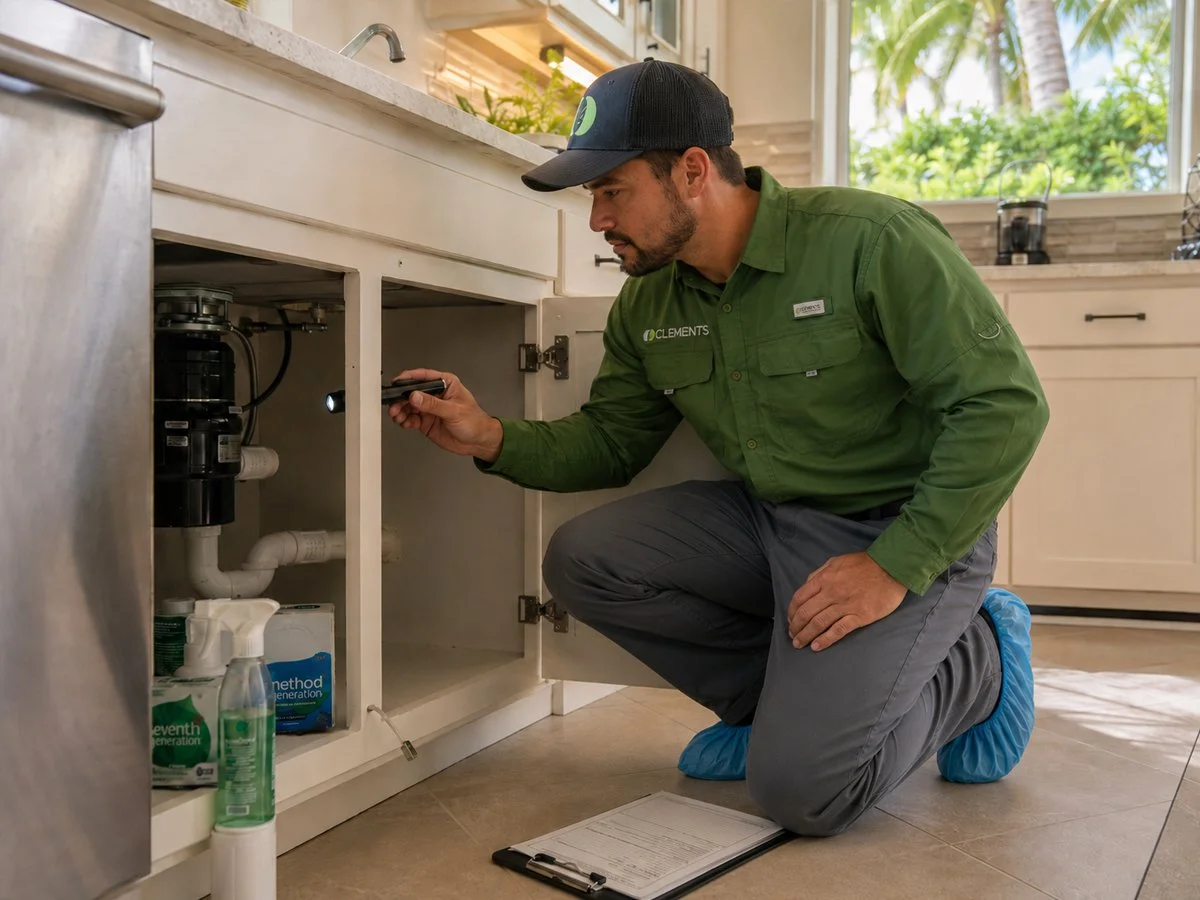
The kitchen is not always the source. Homeowners typically report the kitchen because that is where they see them. Our techs frequently trace German cockroach harborage to a bathroom vanity, a laundry area, or the motor housing of a dishwasher or refrigerator, where warmth and moisture come together.
Cardboard is a recurring entry route. Grocery boxes, delivery cartons, and stored packing material in a garage or pantry come up regularly on inspections. Roaches shelter and lay egg cases in the corrugation, which makes cardboard both a way in and a place to stay.
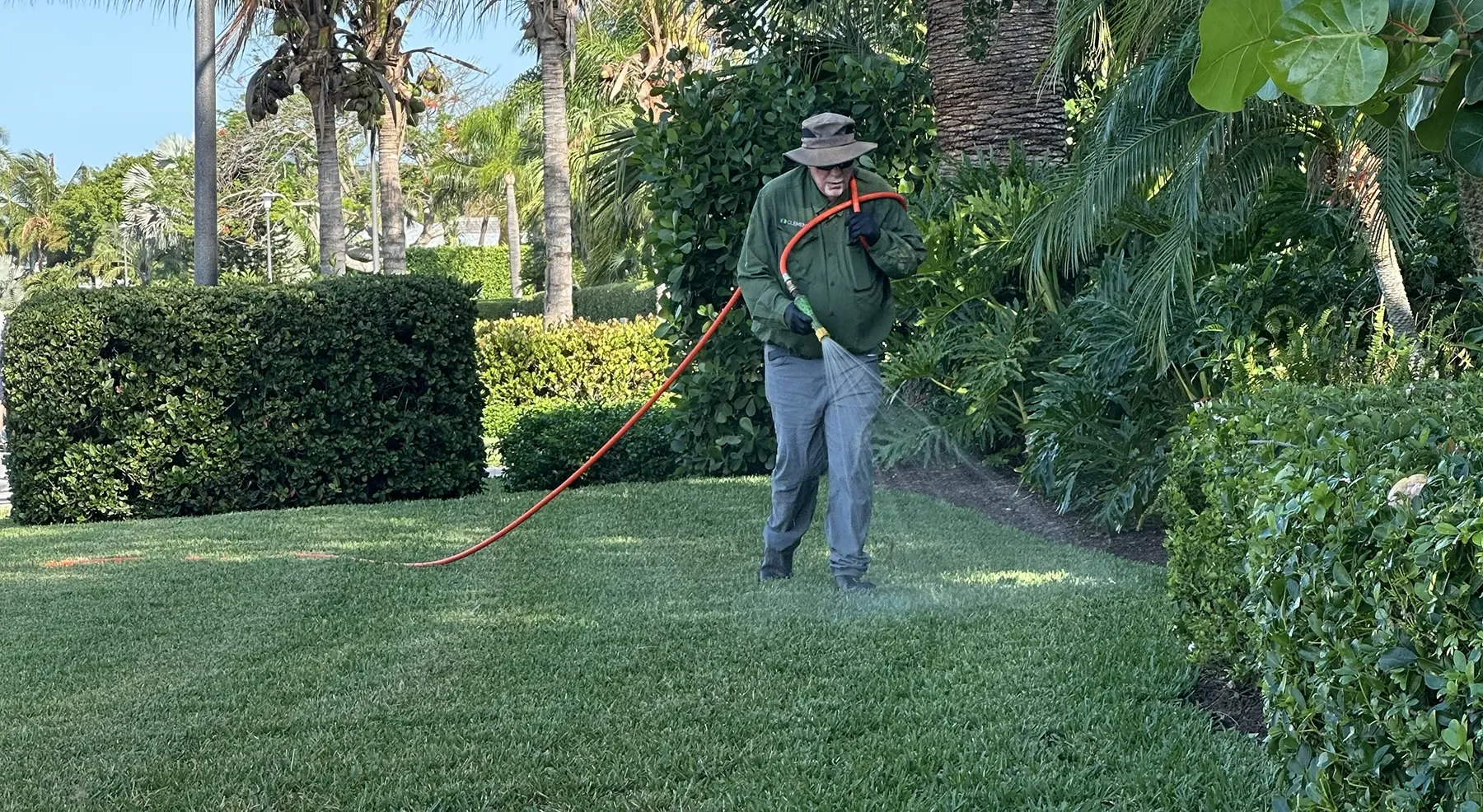
Exterior conditions drive most palmetto bug calls. Mulch banked against the foundation, palm boots left on trunks, dense plantings touching the wall, and irrigation running against the slab account for a large share of large-roach complaints. Correcting those conditions often does more than any interior treatment.
Prior DIY treatment changes the picture. Technicians often arrive at homes where months of retail sprays have scattered the population and made bait placement harder. It is still workable, it just takes a more deliberate approach and usually more than one visit.
How Much Does Professional Cockroach Control Cost in Florida?
Cost depends on a few factors that are worth understanding before you compare quotes.
Species is the biggest driver. A perimeter treatment for palmetto bugs is a different scope of work from a German cockroach job, which generally requires multiple visits, detailed interior placement, and follow-up to confirm the population is gone.
Severity and spread matter. A problem contained to one room costs less to resolve than one that has reached several rooms or moved through shared walls in a multi-unit building.
One-time versus ongoing. A single treatment addresses what is present now. A recurring program addresses the pressure that keeps bringing them back, which in Florida is constant for outdoor species.
It is also worth counting what DIY actually costs. Repeated purchases of sprays, bait stations, and foggers over several months frequently add up to a meaningful amount, and if the population is still there at the end of it, that spend did not buy a resolution.
Clements provides quotes before any work begins. Contact Clements Pest Control for pricing on your specific situation.
How Long Does Professional Roach Treatment Take to Work?
For outdoor species coming in from the landscape, homeowners often notice a difference within the first several days, since the treatment is addressing entry and perimeter pressure rather than an interior population.
German cockroach work typically takes longer. You may see increased activity in the first few days as roaches move and encounter bait, which can be alarming but is generally expected. Meaningful reduction commonly follows over the next couple of weeks, and full resolution usually requires at least one follow-up visit to address what hatched after the initial treatment.
Follow-up is not upselling. Egg cases already in place when the first treatment happens are largely protected, and the second visit exists to catch that generation.
What Should I Do Before the Technician Arrives?
A few things make the first visit substantially more effective.
Stop using aerosol sprays, especially near where you have seen activity, so bait placement is not compromised. Clear items out from under the kitchen and bathroom sinks so those areas can be inspected and treated. Break down and remove cardboard boxes and stored packing material. Clean up food residue, wipe down counters and the areas under appliances, and empty the trash. Fix or report any active leaks. And make a note of where and when you have been seeing them, which helps more than most people expect.
Do not do a deep, disruptive cleanout of every cabinet right before the visit. Some level of undisturbed conditions actually helps a technician find the harborage.
How Do I Keep Roaches From Coming Back?
Once the population is handled, keeping it that way in Florida is mostly about conditions.
Seal the entry points: door sweeps, weather stripping, pipe and utility penetrations, and torn screens. Manage moisture, since it is the single biggest driver in a humid climate. Fix leaks, run exhaust fans, and address any chronic damp areas. Keep mulch, palm boots, and dense plantings off the foundation. Store food and pet food in sealed containers. Break down cardboard rather than storing it. And stay ahead of the seasonal peaks, since roach activity climbs in the hottest, wettest part of the Florida year.
Storm season deserves specific mention. Flooding and heavy rain push outdoor roaches toward structures, which is part of the broader pattern covered in our post on why pests move indoors after a storm.
Common Questions About Cockroach Control in Florida
How do I know if I have German roaches or palmetto bugs?
Size and location are the quickest tells. German cockroaches are small, around half an inch, light brown, with two dark stripes behind the head, and they concentrate in kitchens and bathrooms. Palmetto bugs are much larger, an inch and a half or more, reddish brown, and usually turn up singly in garages, drains, and laundry areas.
Can I get rid of roaches without a professional?
Sometimes. Occasional large outdoor roaches often respond well to sealing entry points, reducing moisture, and pulling mulch away from the foundation. German cockroaches are a different situation and rarely resolve through retail products, largely because of how they reproduce and where they hide.
Does seeing one roach mean there are more?
Not necessarily, and this depends on species. A single large palmetto bug may genuinely be a lone visitor that came in under a door. A single small striped roach is more concerning, because German cockroaches live indoors in groups and a visible one usually means others are hidden nearby.
Are professional roach treatments safe around pets and children?
Licensed applicators use products according to label requirements, which include specific directions for occupied homes. Ask your technician about any preparation steps, areas to keep pets away from, and how long to wait before normal use of treated areas. A reputable company will answer that clearly before treating.
Why do I still see roaches after treatment?
Some activity afterward is common and often expected, particularly with baiting, as roaches move and encounter the treatment. Egg cases present at the time of the first visit are also largely protected, which is why follow-up matters. Persistent activity beyond a few weeks is worth reporting so the approach can be adjusted.
Do roaches mean my house is dirty?
No. Outdoor species enter well-kept Florida homes constantly because of climate and landscaping, not housekeeping. German cockroaches arrive by being carried in on cardboard, groceries, appliances, or secondhand items. Sanitation affects how well a population can sustain itself, but it is not what caused it to arrive.
Are cockroaches a health concern?
They can be. Cockroach allergens are a recognized asthma trigger, particularly in children, and roaches can mechanically carry bacteria from the areas they travel through onto surfaces and food. That is part of why an established indoor population is worth resolving rather than tolerating.
How Clements Pest Control Can Help
The most useful thing we can do on a roach call is often the first thing: tell you exactly what you are dealing with. A palmetto bug problem and a German cockroach problem look similar to a homeowner at eleven at night, and they call for completely different work.
At Clements Pest Control, we identify the species, find the harborage, and build the treatment around what is actually happening in your home rather than a standard spray. We help homeowners across the Treasure Coast, Central Florida, and Southwest Florida with pest control, termite protection, rodent control, mosquito control, and lawn care, including families in Vero Beach, Stuart, Port St. Lucie, Orlando, and Naples.
If you are not sure whether what you are seeing needs professional treatment, call 772-562-6450 or contact Clements Pest Control. We will tell you plainly either way.