
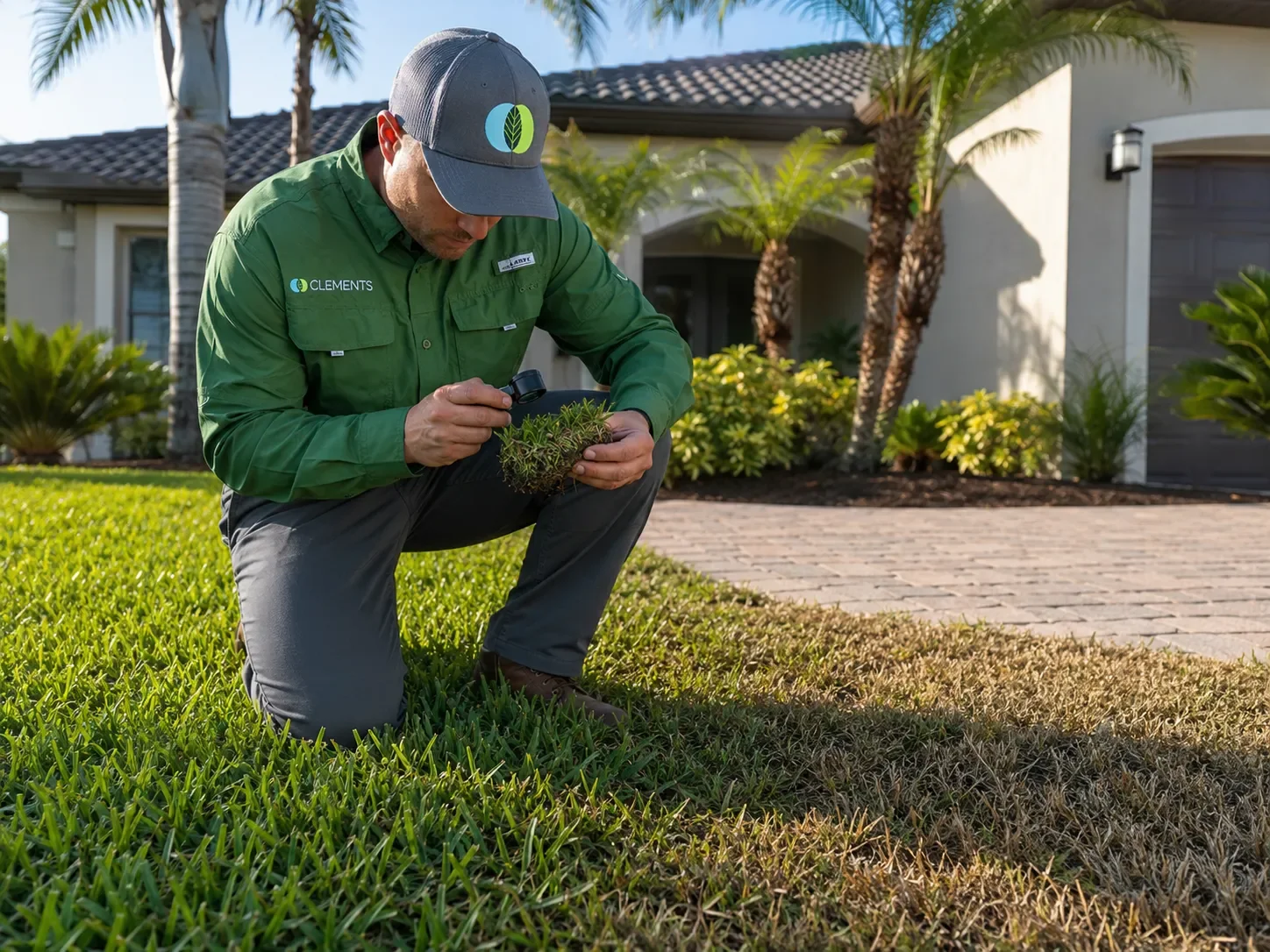
Few things are more frustrating than watching a green Florida lawn turn yellow, thin, or patchy seemingly overnight. The hard part is figuring out why. Sometimes the grass is simply stressed from heat, drought, or how it's being cared for. Other times, insects are quietly feeding below the surface and the damage is just starting to show.
Telling the two apart matters, because the fixes are completely different. Watering a lawn that's actually under attack from chinch bugs won't help, and treating for pests when the real issue is poor irrigation wastes time and money. This guide walks through how to read the signs so you can respond the right way.
Why Florida Lawns Are So Prone to Both Problems
Florida's climate is tough on turf. Long stretches of heat, intense sun, sandy soil that drains fast, and unpredictable rain all put grass under regular stress. The same warm, humid conditions also let lawn-damaging insects stay active for most of the year instead of dying back over a cold winter.
St. Augustine grass, the most common turf across the Treasure Coast, Central Florida, and Southwest Florida, is especially vulnerable to both. It struggles in drought and it happens to be a favorite target for chinch bugs. That combination is exactly why so many homeowners have trouble diagnosing what's wrong.
What Lawn Stress Usually Looks Like
Stress damage tends to follow a logical pattern tied to the environment or your lawn care routine. When you know what to look for, it often points back to a cause you can identify.
Common signs of a stressed lawn
Drought and heat stress usually show up first in the sunniest, driest areas, such as spots near sidewalks, driveways, and south-facing slopes. The grass may take on a gray-blue or dull green tint before it browns, and footprints can linger instead of springing back, a classic sign the blades are short on water.
Other stress causes leave their own clues. Scalping from mowing too low or with a dull blade browns the lawn fairly evenly. Fertilizer burn or pet urine creates sharp-edged yellow or brown spots. Compacted soil and shaded areas produce thin, weak growth that never quite fills in.
The key theme with stress is that the damage usually relates to conditions, like sun exposure, water, mowing, or soil, rather than spreading on its own.
Does the grass respond to water?
One of the fastest tells is how the lawn reacts to a good watering. Grass that's simply thirsty will often perk up and green back up within a day or two once it gets consistent moisture. If you water properly and the patches keep getting worse anyway, stress probably isn't the whole story.
What Pest Damage Usually Looks Like
Insect damage behaves differently. Instead of matching sun or water patterns, it tends to start in one area and spread outward as the pests feed and multiply. The grass also won't bounce back with watering, because the problem is the insects, not the moisture.
Chinch bugs: the most common culprit
In Florida, chinch bugs are the number one lawn pest behind sudden browning, especially in St. Augustine grass during the hot months. They pierce the grass blades, suck out moisture, and inject a toxin that keeps the grass from recovering. The result is irregular yellow to brown patches that expand quickly, often beginning in sunny, dry areas where they're easy to mistake for drought.
A simple float test can confirm them. Cut the top and bottom off a coffee can or use a short piece of PVC pipe, push it a couple of inches into the turf at the edge of a damaged patch, and fill it with water. Wait a minute or two and watch for small black-and-white insects floating to the surface. Our deeper guide on the signs and damage caused by chinch bugs in Florida lawns walks through this test in more detail.
Other lawn pests to watch for
Chinch bugs aren't the only insects that damage Florida turf. Mole crickets tunnel through the soil and uproot grass, leaving spongy ground and raised trails. Sod webworms chew notches in the blades and create chewed-looking patches, often with moths fluttering up when you walk across the lawn at dusk. Grubs feed on roots, leaving grass that pulls up easily like loose carpet.
What these pests share is a pattern of spreading damage that ignores how much you water. If the brown area keeps growing and watering makes no difference, insects are a strong suspect.
Stress vs. Pest Damage: A Quick Side-by-Side
When you're standing in the yard trying to decide, these contrasts usually point you in the right direction:
Location: Stress often tracks sun, slope, and dry edges. Pest damage spreads outward from a starting point regardless of sun exposure.
Response to water: Stressed grass usually recovers with proper watering. Pest-damaged grass keeps declining.
Edges of the damage: Stress can look uniform or sharply defined. Pest damage often has an expanding, irregular border.
Speed: Drought stress builds gradually. Chinch bug damage can blow up over a week or two in peak heat.
The pull test: If grass lifts up easily with little root resistance, suspect grubs or other root feeders.
These are helpful clues, not guarantees. Lawn issues frequently overlap. A lawn weakened by drought is also an easier target for insects, and disease can mimic both. That's why a closer look is sometimes the only way to be sure.
When It's Neither: Don't Forget Lawn Disease
Florida's humidity also invites fungal lawn diseases like brown patch and gray leaf spot, which can look a lot like pest or drought damage. Fungal issues often appear as roughly circular patches, sometimes with a darker ring around the edge, and tend to flare up during warm, wet, humid stretches. Because the treatment for disease is different again, misreading it as bugs or thirst usually means the problem comes back.
Practical Steps Homeowners Can Take
Before you reach for a treatment, a little investigation goes a long way.
Start by checking your watering. Most Florida lawns do best with deep, infrequent watering in the early morning rather than light daily sprinkling. Confirm your irrigation is actually reaching the troubled spots, since clogged or misaimed heads create dry patches that look like pest damage.
Next, look closely at the grass itself. Part the blades at the edge of a damaged area, where the green meets the brown, and look for insects, chewed blades, or tunneling. Run the float test if you suspect chinch bugs and the pull test if you suspect grubs.
Review your mowing habits too. Cutting too short or with a dull blade stresses the lawn and makes it more vulnerable to everything else. Keep St. Augustine grass on the taller side and sharpen the blade regularly.
Finally, keep your overall lawn health in mind. A strong, well-fed lawn shrugs off stress and resists pests far better than a weak one. Good spring care sets the tone for the whole season, something we cover in our posts on why spring lawn fertilization matters for Florida lawns and how spring lawn care helps prevent pest problems before summer.
Why It's Worth Getting the Diagnosis Right
A misdiagnosis isn't just frustrating, it's costly. Damaged turf left untreated can spread until whole sections have to be resodded. And lawn problems rarely stay in the lawn. As we explain in our look at how lawn pests can become indoor pest problems, insects thriving in a struggling yard often move toward the house in search of food, water, and shelter. Solving the lawn issue correctly helps protect your home too.
Frequently Asked Questions
How can I tell if it's chinch bugs or just drought?
Try watering the area properly for several days. Drought-stressed grass usually greens back up, while chinch bug damage keeps spreading despite watering. The float test, pushing a bottomless can into the turf and filling it with water to see if insects float up, is the most reliable home check.
Why is my lawn brown even though I water it?
If you're watering correctly and the lawn still browns and spreads, the cause is likely something other than thirst, such as chinch bugs, grubs, a fungal disease, or an irrigation problem leaving certain spots dry. A close inspection of the affected edges usually narrows it down.
How fast can chinch bugs damage a lawn?
Quickly. In the heat of late spring and summer, chinch bug populations can explode and turn a healthy patch yellow to brown within a couple of weeks, which is why fast identification matters so much.
Can stress and pests happen at the same time?
Yes, and they often do. A lawn weakened by heat or drought is an easier target for insects, so it's common to find both at once. That overlap is a big reason professional diagnosis is so helpful.
Should I treat my lawn myself or call a professional?
Minor stress issues from watering or mowing are often things you can correct yourself. But if damage is spreading, you can't pinpoint the cause, or store-bought treatments aren't helping, a professional inspection saves you from guessing and treating the wrong problem.
How Clements Pest Control Can Help
Diagnosing a struggling lawn isn't always straightforward, especially when stress, insects, and disease can all look alike. At Clements Pest Control, our team takes the guesswork out of it. We inspect the lawn, confirm what's actually causing the damage, and treat it correctly the first time through our lawn care program, targeting pests like chinch bugs at every life stage while helping your turf recover and stay strong.
Because pest and lawn problems are so often connected, we also help Florida homeowners with pest control, termite protection, rodent control, and mosquito control across the Treasure Coast, Central Florida, and Southwest Florida, including communities like Vero Beach, Port St. Lucie, Orlando, and Naples.
If your grass is browning, thinning, or spreading damage and you're not sure why, don't wait for it to get worse. Contact Clements Pest Control or call us at 772-562-6450 to schedule an inspection and get your lawn back on track.