
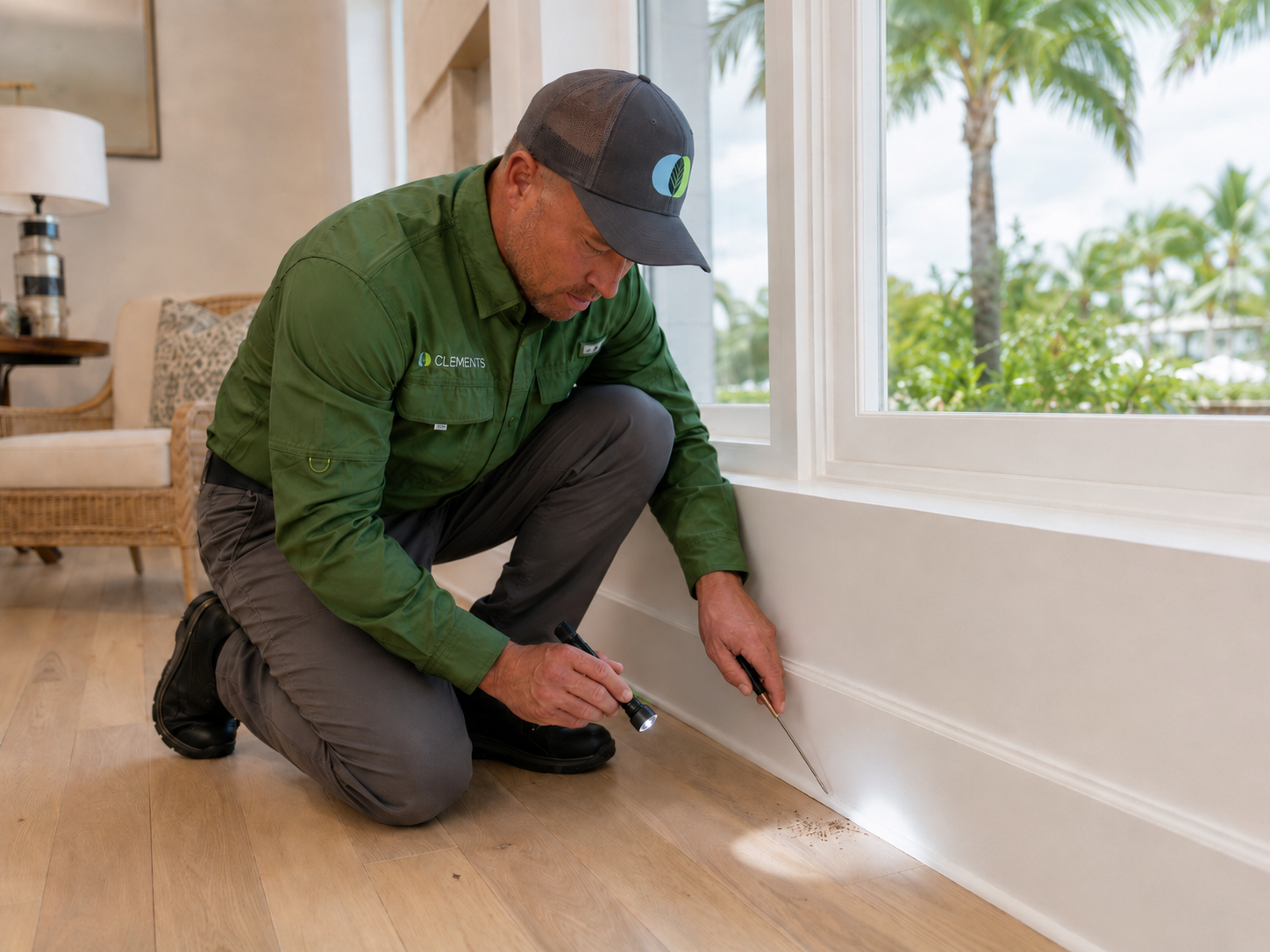
If you have lived in Florida long enough, you already know termites are part of the deal. Our warm, humid climate keeps these wood-destroying insects active nearly year-round, and one of the earliest clues that drywood termites have moved in is a small pile of pellets you might mistake for dirt or sawdust.
Those pellets are called frass, and finding them on a windowsill, near a baseboard, or under a wooden beam is worth taking seriously. Drywood termites live deep inside dry wood, which means they can chew through framing, trim, and structural beams for months before any visible damage shows up on the surface. The good news is that catching frass early gives you a real chance to stop the colony before it spreads.
Here is what Florida homeowners need to know about drywood termite droppings, how to tell them apart from common look-alikes, and the right next step if you spot them around your home.
What Drywood Termite Droppings Look Like
Drywood termite frass is the waste pushed out of the wood by an active colony. As the termites tunnel and feed, they create tiny exit points called kick-out holes and shove their droppings through them. Over time, the pellets pile up below.
A few features make frass fairly easy to recognize once you know what to look for.
Small, Hard, Six-Sided Pellets
Each pellet is about the size of a grain of sand or coarse ground pepper. Look closely and you will notice the pellets are roughly oval, with six flat sides and rounded ends. They are also surprisingly uniform, since every one is shaped the same way as it passes through the termite's body.
A Color That Matches the Wood
Frass takes on the color of whatever the termites are eating. In Florida homes, that means anything from a sandy tan to a deep coffee brown. You might even notice slight color differences from one room to the next if your home mixes softwood framing with darker hardwood trim or cabinetry.
Small Piles That Reappear After You Clean Them
This is the giveaway. A homeowner sweeps up a pile under a window, vacuums the area, and wakes up the next morning to a fresh pile in the same spot. When frass keeps coming back, there is an active colony inside the wood above it.
Common spots to check include window frames, door frames, attic beams, baseboards, crown molding, hardwood furniture, and any exposed wood in garages, sheds, or lanais.
How to Tell Frass Apart From Look-Alikes
Plenty of household debris looks similar at first glance. A quick comparison usually clears things up.
Sawdust from a recent repair or drilling project looks fluffy and uneven, with splinters and rough wood fibers. Drywood termite frass is hard, gritty, and uniformly shaped.
Coffee grounds match the color of darker frass but feel damp and clump together. Termite pellets are bone-dry and roll between your fingers like fine sand.
Subterranean termite debris is a different story. Subterranean termites build mud tubes along foundations, slabs, and exterior walls to travel between soil and wood. Drywood termites do not build tubes. Instead, you may notice their droppings under wood, along with discarded wings near windows and light fixtures during swarming season. Knowing which type of termite you are dealing with matters, because subterranean and drywood termites require very different treatment plans.
Carpenter ant shavings look similar but contain rougher wood fragments and often have insect parts mixed in. Carpenter ants push debris out of galleries the same way termites do, but the material is wood, not waste.
Why Florida Homes Are a Magnet for Drywood Termites
Florida is one of the most termite-prone states in the country, and drywood termites are especially common across the Treasure Coast, Central Florida, and Southwest Florida. A few reasons:
The climate stays warm and humid most of the year, which keeps colonies active through more seasons than in cooler states. Many Florida homes feature exposed wood beams, wood-frame windows, wood soffits, and decorative trim that drywood termites can colonize without ever touching the soil. Coastal homes often have salt air that breaks down paint and sealants, exposing more wood. And the constant movement of furniture, picture frames, and wooden décor between homes can transfer drywood termites without anyone realizing it.
If you live anywhere from Vero Beach down through Stuart, Port St. Lucie, and the Treasure Coast, or out toward Orlando, Naples, and the rest of Southwest Florida, drywood termites should be on your radar.
What to Do When You Find Drywood Termite Droppings
Finding frass is not a reason to panic, but it is a reason to move quickly. Here is the right order of steps.
Confirm the Source Without Disturbing It
Look up. Frass falls, so the colony is somewhere above the pile. Check for tiny kick-out holes in nearby wood, blistered paint, warped trim, or hollow-sounding wood when you tap it. Try not to paint, caulk, or seal over the holes before an inspection. A technician can learn a lot from those entry points.
Skip the DIY Sprays
Hardware-store sprays and foggers might kill a few termites near the surface, but they will not reach the reproductives and workers buried deep in the wood. Drywood colonies often extend into wall voids, attic rafters, and structural beams where surface treatments cannot follow. DIY attempts usually delay real treatment while damage continues.
Schedule a Professional Termite Inspection
A licensed termite professional can confirm the species, map out the extent of the activity, and recommend a treatment that actually fits the situation. Depending on what the inspection reveals, the right approach may be a targeted local treatment for a small, contained area, or a whole-structure fumigation for a widespread infestation. Either way, treatment works best when you catch the colony early.
You can learn more about how we approach termite identification and treatment on our Clements termite protection page.
How to Lower the Risk of Future Infestations
Even after treatment, smart prevention keeps drywood termites from settling back in.
Keep exterior wood sealed, stained, or painted so termites cannot easily access it. Trim back tree branches and shrubs that touch siding, soffits, or roof edges. Replace any rotted or water-damaged wood quickly, since softened wood is easier for termites to colonize. Inspect wooden furniture, antiques, and picture frames before bringing them into the house. And schedule a professional termite inspection at least once a year, especially if your home is older or has plenty of exposed wood.
For broader Florida-friendly tips, you may also want to read [related blog about seasonal pest prevention in Florida].
Frequently Asked Questions About Drywood Termite Frass
Do drywood termite droppings stain or damage surfaces?
The pellets themselves usually do not stain hard surfaces, but they can scratch finished wood or laminate floors if rubbed in. The bigger concern is what is happening above the pile, not the pellets themselves.
Can drywood termites live in furniture?
Yes. Drywood termites can colonize wood furniture, picture frames, antique pieces, and even wood floors. If you see frass on a shelf or under a piece of furniture, inspect that piece carefully.
Are drywood termite droppings harmful to people or pets?
Frass is not toxic, but it can irritate eyes, skin, and lungs in sensitive people. Some people experience allergy-like symptoms when exposed to large amounts. Avoid sweeping dry piles without a mask, and keep pets away while you clean.
How quickly can drywood termites damage a Florida home?
Damage builds slowly compared with subterranean termites, but a mature drywood colony left alone for several years can compromise window frames, door frames, and even structural beams. Florida's long active season speeds the timeline compared with cooler climates.
What time of year do drywood termites swarm in Florida?
Drywood termite swarms in Florida typically occur from late spring into early fall, with peaks during warm, humid evenings. Seeing winged termites or piles of discarded wings indoors is another strong sign of activity.
How Clements Pest Control & Lawn Care Can Help
At Clements, we have spent years helping Florida homeowners deal with drywood termites and the damage they can cause. If you have found frass and are not sure what you are looking at, our team can perform a thorough inspection, identify the species, locate the active areas, and walk you through a treatment plan that fits your home. We work with families across Indian River County, South Florida, Central Florida, Southwest Florida, and the rest of our Florida service areas.
Beyond termite protection, our team also helps with pest control, rodent control and exclusion, mosquito control, and lawn care, so we can keep your whole property protected throughout the year.
If you spotted small pellets that you suspect are drywood termite droppings, do not wait for the damage to spread. Contact Clements today to schedule a termite inspection and get peace of mind that your home is protected.