
If you have flipped on the kitchen light late at night and watched a small, light brown roach dart behind the stove, you have probably met the German cockroach. It is the most common indoor roach in Florida homes, and the kitchen is its favorite room. Warmth, moisture, food, and tight hiding spots all come together there, which is exactly what this pest is looking for.
Summer makes the problem worse. As temperatures and humidity climb across Florida, German cockroaches breed faster and spread more aggressively. A small issue you might have ignored in spring can become a real infestation within weeks. Understanding why they show up when the heat arrives, and what to do about it, can save you a lot of frustration later in the season.
What German Cockroaches Look Like
German cockroaches are small, usually about half an inch long, and light brown to tan in color. The easiest way to identify them is the pair of dark parallel stripes running just behind the head. Unlike the larger American cockroaches you sometimes see outdoors or in drains, German roaches stay indoors and prefer to stay close to food and water.
They are not strong fliers, so you will almost always see them running rather than flying. During the day they hide in cracks, crevices, and warm tight spaces. At night they come out to feed, which is why a daytime sighting often means the population is already large enough that some roaches are being pushed out of crowded hiding spots.
Why German Roaches Show Up in Summer
A few roaches in winter can quietly turn into a kitchen full of them by midsummer. Florida's climate is a big part of the reason.
Heat Speeds Up Their Breeding Cycle
German cockroaches reproduce quickly under the best of conditions, and warm weather pushes that into overdrive. A single female carries an egg case that can hold 30 to 40 eggs, and warm temperatures shorten the time between generations. The hotter and more humid it gets, the faster the population grows, which is why summer infestations seem to appear out of nowhere.
Humidity Keeps Them Comfortable
These roaches need moisture to survive, and Florida summers deliver plenty of it. The space under a kitchen sink, behind the dishwasher, or around a leaky pipe gives them the damp, warm environment they thrive in. Even normal summer humidity in the air makes the indoors more hospitable to them.
They Move Indoors to Escape the Heat and Find Food
While the kitchen is comfortable year-round, summer drives more pest activity overall as insects search for cooler, food-rich shelter. German roaches rarely live outdoors in Florida the way some other pests do. Instead, they are usually carried inside in grocery bags, cardboard boxes, used appliances, or secondhand furniture, and then summer conditions let them multiply.
Early Signs of a German Roach Problem
Catching an infestation early makes it far easier to control. Watch for these signs around the kitchen.
Live Roaches During the Day
Because German roaches are nocturnal, seeing them in daylight usually means the population has outgrown its hiding spots. A daytime sighting is a signal to act, not wait.
Droppings That Look Like Ground Pepper
German cockroach droppings look like small dark specks or coffee grounds, often found in drawers, inside cabinets, along countertop edges, and in corners. You may also notice dark smear marks in areas with high moisture.
A Musty, Oily Odor
A large infestation can produce a distinct musty smell. The more roaches present, the stronger the odor, and some people notice it before they ever see a roach.
Egg Cases and Shed Skins
Look for small, brown, capsule-shaped egg cases tucked into cracks and crevices, along with the pale shed skins roaches leave behind as they grow. Finding these means the population is actively reproducing.
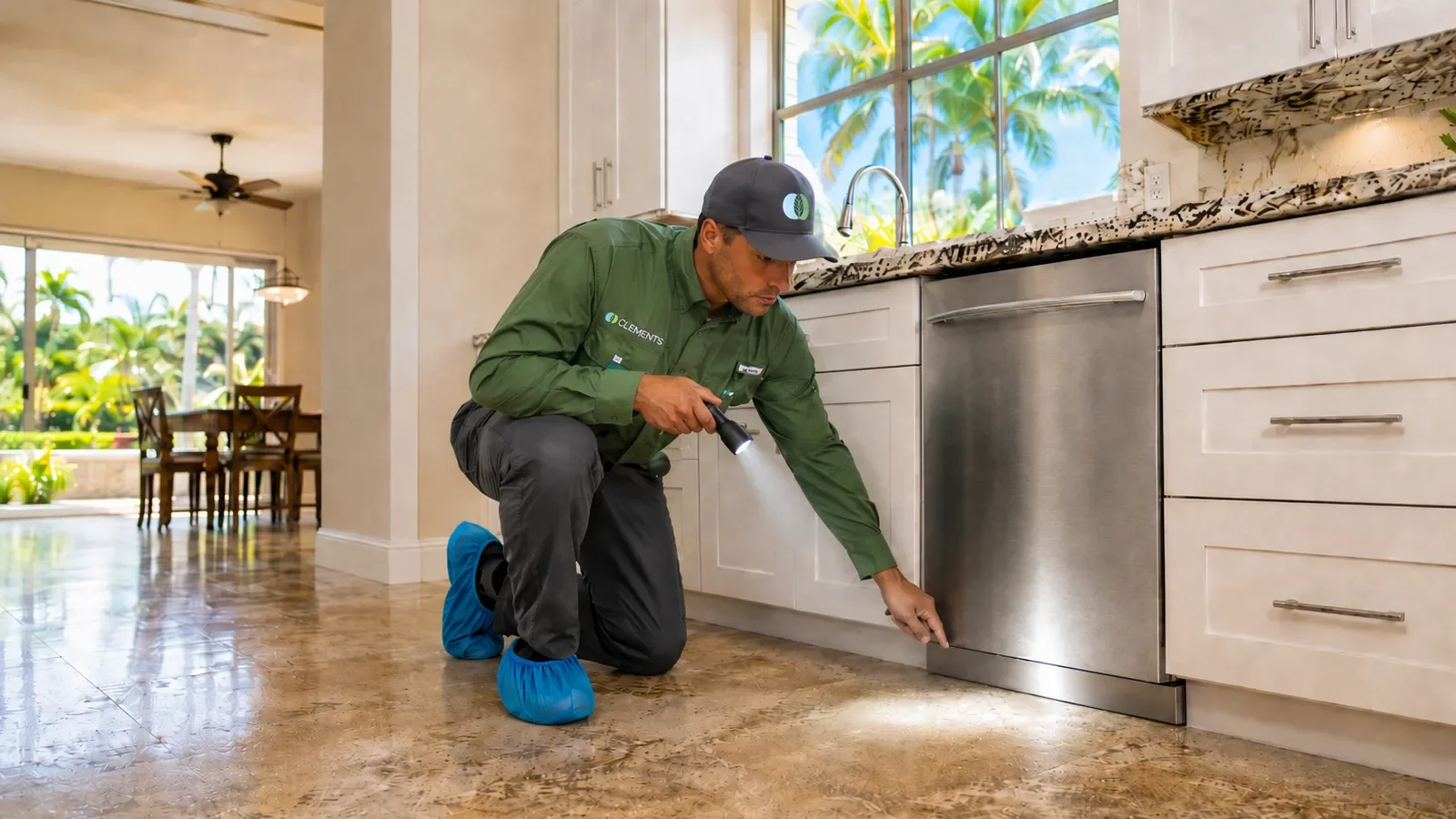
Common hiding spots include behind and under the refrigerator, around the stove and dishwasher motor, inside cabinet hinges and corners, under the sink, and inside small appliances like toasters and coffee makers.
Why German Roaches Are a Health Concern
Beyond the unpleasant factor, German cockroaches are worth taking seriously because they can affect your family's health. As they travel across counters, dishes, and food prep areas, they can spread bacteria picked up from drains and garbage. Their droppings, shed skins, and saliva are also known allergens and asthma triggers, especially for children. In a kitchen, where food is handled daily, that combination makes early control important.
How to Keep German Roaches Out of Your Kitchen
Prevention comes down to removing the food, water, and shelter that draw them in. These steps make a real difference, especially heading into the hottest months.
Cut Off Their Food and Water
Wipe counters and sweep floors daily, since even crumbs and grease residue feed a colony. Store pantry items like cereal, flour, and pet food in sealed containers. Avoid leaving dishes in the sink overnight, take out the trash regularly, and fix any leaks under the sink or behind appliances so roaches cannot find standing water.
Seal Up Their Hiding Spots
Caulk cracks and crevices along baseboards, around pipes, and where cabinets meet the wall. Pay attention to gaps behind and beneath appliances. The fewer tight, warm spaces a roach can squeeze into, the less appealing your kitchen becomes.
Inspect What You Bring Inside
Since German roaches often hitchhike indoors, check grocery bags, cardboard boxes, secondhand appliances, and used furniture before bringing them into the home. Breaking down and recycling cardboard quickly also removes a favorite hiding and breeding material.
Know When DIY Is Not Enough
Over-the-counter sprays and store-bought baits can knock down a few roaches, but German cockroaches are notoriously difficult to eliminate once established. They reproduce quickly, hide deep in places sprays cannot reach, and can become resistant to certain products. If you are still seeing roaches after a couple of weeks of cleaning and store-bought treatments, the colony is likely larger than what surface efforts can handle, and professional pest control is the more reliable path.
Frequently Asked Questions About German Roaches in the Kitchen
Why do I suddenly have roaches in my clean kitchen?
A clean kitchen helps, but German roaches are often brought in on bags, boxes, or used appliances, and they can live on very small amounts of food and moisture. Summer heat then speeds up their breeding, so a few hidden roaches can multiply quickly even in a tidy home.
Does seeing one German roach mean I have an infestation?
Often, yes. Because they hide so well and breed so fast, a single visible roach, especially during the day, usually points to many more out of sight. It is best to investigate and act early rather than assume it was a one-time visitor.
Are German cockroaches harmful?
They do not bite, but they can spread bacteria across food surfaces and trigger allergies and asthma, particularly in children. That makes them more than just a nuisance in a room where food is prepared.
Why are German roaches so hard to get rid of?
They reproduce rapidly, hide in places that are difficult to reach, and can develop resistance to some store-bought products. Successful control usually requires targeting the entire population, including hidden egg cases, which is where professional treatment makes the difference.
What time of year are roaches worst in Florida?
German cockroach activity tends to peak in the warm, humid summer months, when faster breeding cycles cause populations to climb. They can be a year-round problem indoors, but summer is typically when homeowners notice the biggest jump.
How Clements Pest Control Can Help
At Clements, we have spent years helping Florida homeowners take back their kitchens from German cockroaches. Because these roaches breed so fast and hide so well, the most effective treatment targets the whole population, not just the few you can see. Our team can inspect your home, find where the roaches are nesting, and apply a treatment plan built to break the breeding cycle and keep them from coming back.
We help families across the Treasure Coast, Central Florida, and Southwest Florida, including Vero Beach, Stuart, Port St. Lucie, Orlando, and Naples. Beyond pest control, our team also handles termite protection, rodent control, mosquito control, and lawn care, so we can keep your whole property protected through the busy summer season and the rest of the year.
If German roaches have moved into your kitchen, do not wait for the population to grow. Contact Clements today to schedule a pest control inspection and get your kitchen back.