
When most Florida homeowners hear the word "termite treatment," they picture a giant tent draped over their roof. While whole-structure fumigation has been the standard for decades, it isn't the only option. For many homes in Stuart, Jupiter, Palm Beach Gardens, and the surrounding North Palm Beach County area, no-tent termite treatment is a practical alternative that protects the home without the headaches of packing up and moving out for several days.
If you've recently spotted small piles of wings on a window sill, tiny pellets that look like sawdust, or hollow-sounding wood, you're likely dealing with drywood termites. The good news is that you may have more treatment options than you realized.
What Is No-Tent Termite Treatment?
No-tent termite treatment, sometimes called localized or spot treatment, is a targeted approach to eliminating drywood termites without covering the entire home in a fumigation tent. Instead of releasing gas throughout the structure, a trained technician identifies active infestation sites and treats them directly using a combination of injected foams, liquid termiticides, borate wood treatments, or termiticide dusts.
The goal is the same as tenting: eliminate the termites currently damaging the wood. The difference is in the approach. No-tent treatment focuses on the areas where activity is confirmed rather than treating every cubic foot of the structure.
How Does the Process Work?
Every home is different, but a typical no-tent treatment in Stuart follows a similar path.
Step 1: Inspection
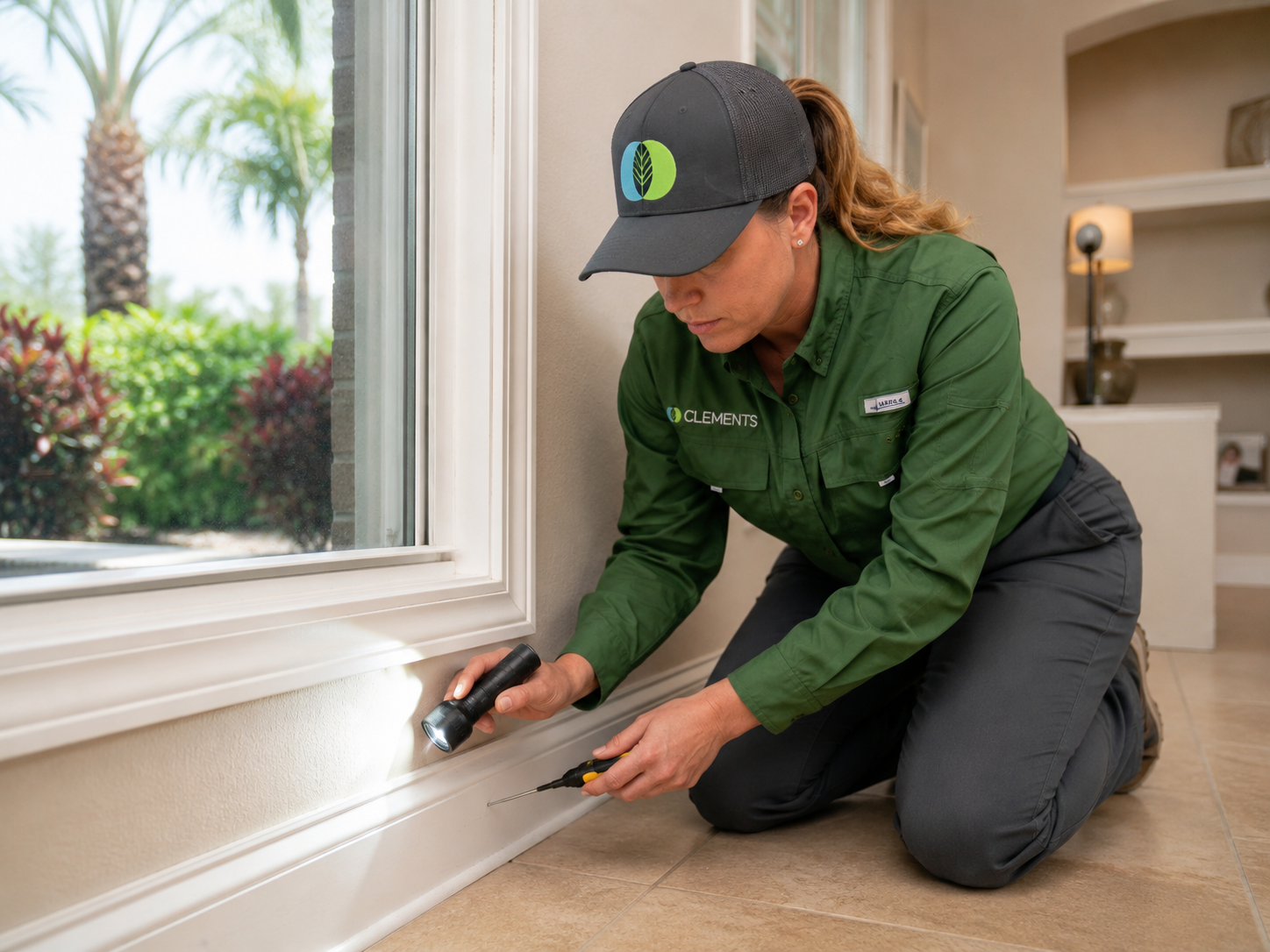
A licensed technician performs a detailed inspection of the home, looking for signs of drywood termite activity. This includes checking attic spaces, window and door frames, baseboards, eaves, and any exposed wood. Signs of activity often include frass (small pellets of termite droppings), discarded wings, kick-out holes, and audible clicking sounds in the walls.
If you've already spotted swarmers, our blog on"What Termite Swarmers Mean (And Why You Shouldn't Ignore Them)" explains exactly what those flying insects are telling you about what may be hidden inside the wood.
Step 2: Mapping the Infestation
Once the technician knows where termites are active, they map out treatment zones. This is the most important step. A no-tent treatment is only as effective as the inspection that precedes it. Missed galleries mean missed colonies.
Step 3: Targeted Application
Treatment methods vary depending on the location and severity of the infestation:
Small holes are drilled into infested wood, and a termiticide foam is injected. The foam expands through the termite galleries, reaching insects that would otherwise be impossible to access.
Liquid borate products are applied to accessible wood, especially in attics. Borates soak into the wood, creating a long-term protective barrier that kills termites on contact and prevents future colonization.
Termiticide dusts are sometimes used inside cabinets, wall voids, or door frames where foam isn't practical.
Step 4: Monitoring
After treatment, your technician will recommend a follow-up inspection schedule. Florida's climate is extremely hospitable to termites, and ongoing monitoring is the best way to catch new activity early.
When Is No-Tent Treatment a Good Fit?
No-tent termite treatment isn't right for every situation. It tends to work best when:
The infestation is localized and clearly defined. If activity is contained to a few rooms, a section of attic, or specific window frames, targeted treatment can be highly effective.
The home has structural features that make tenting difficult. Solar panels, certain roof designs, attached structures, or shared walls in townhomes can complicate fumigation.
The homeowner cannot vacate the property for several days. Tenting requires the home to be empty of people, pets, and most food items for two to three days. For families with medical equipment, pets, or busy schedules, that's often a non-starter.
The infestation is caught early. The earlier drywood termite activity is identified, the more likely a no-tent approach will fully resolve it.
When Is Tenting the Better Choice?
For widespread infestations, especially those that have spread to inaccessible areas like the interior of structural beams or multiple sections of the attic, whole-structure fumigation is often the more thorough option. Drywood termites can establish multiple satellite colonies inside a single home, and if activity is spread across many areas, tenting reaches places that no-tent methods cannot.
Subterranean termites, which approach the home from the soil rather than nesting inside the wood, require a completely different treatment strategy. If you suspect that's what you're dealing with, our blog on "What to Know About Subterranean Termites in Florida" breaks down how they differ from drywood termites and what treatment looks like.
A reputable termite company will walk you through the pros and cons of each approach honestly. The right answer depends on your specific situation, not on what's easiest to sell.
Why North Palm Beach County Homes Are Especially Vulnerable
Stuart, Hobe Sound, Jupiter, Tequesta, and Palm Beach Gardens sit in a part of Florida where conditions favor termites year-round. Warm temperatures, ocean breezes carrying moisture inland, and the prevalence of older wood-framed homes all contribute to elevated termite pressure across the region.
Drywood termites are particularly common in coastal North Palm Beach County. Unlike subterranean termites, they don't need contact with soil. They live entirely inside the wood they consume, which means attic rafters, fascia boards, window frames, and even furniture can all become infestation sites. Many homeowners don't realize they have a problem until they see swarmers or notice damage already in progress.
For more on the wider service area Clements covers, see Clements Stuart pest control page.
Homeowner Tips to Reduce Termite Risk
Whether you've recently had treatment or you're trying to prevent an infestation in the first place, a few habits go a long way:
Keep firewood, lumber, and cardboard stored away from the house, ideally on a raised surface. Trim back tree branches and shrubs that touch the roof or exterior walls. Repair leaky gutters, downspouts, and outdoor faucets promptly. Wood-destroying insects are drawn to moisture.
Have an annual termite inspection, especially if your home is more than 10 years old or you've never had one done. Many homeowners only discover termites after damage has occurred, and inspections catch issues long before they become expensive.
Watch for swarmers in spring and early summer. If you see winged insects gathered near windows or light fixtures, save a few in a jar or take a clear photo and contact a professional.
Frequently Asked Questions
Is no-tent termite treatment as effective as tenting?
For localized infestations, yes. The key is a thorough inspection. When the infestation is correctly identified and fully accessible, no-tent treatments can be highly effective. For widespread or hidden infestations, tenting may be the safer bet.
How long does a no-tent termite treatment take?
Most treatments are completed in a single day. You don't typically need to leave the home, and there's no need to bag food or remove pets.
Will I need to drill holes in my walls?
In some cases, yes. Small holes may be drilled in infested wood so foam or termiticide can be injected into the galleries. These holes are usually small and can be patched. Your technician will discuss what's needed before any work begins.
How much does no-tent termite treatment cost?
Pricing varies based on the size of the home, severity of the infestation, and the treatment methods used. Localized treatments are often less expensive than whole-structure fumigation, but the only way to get an accurate number is to schedule an inspection.
How often should I have a termite inspection?
Once a year is a smart baseline for most Florida homes. Homes near the water, older homes, or homes that have had termite activity in the past may benefit from inspections every six months.
Can I treat drywood termites myself?
DIY products may slow down activity, but they rarely eliminate a colony. Drywood termites build galleries deep inside the wood, far beyond the reach of over-the-counter sprays. Professional treatment is almost always required to fully resolve an infestation.
How Clements Pest Control Can Help
At Clements Pest Control, we've helped Florida homeowners protect their homes from termites for decades. Our team serves Stuart, Jupiter, Hobe Sound, Palm Beach Gardens, and the broader North Palm Beach County area with thorough inspections and honest recommendations. If a no-tent treatment is the right fit for your home, we'll explain the process and handle the work. If tenting is the better option, we'll tell you that too.
We also help homeowners with general pest control, rodent control, mosquito control, and lawn care, so if termites turn out to be just one of several pest concerns, our team can address the bigger picture.
If you've spotted signs of termite activity or you're due for an inspection, contact Clements Pest Control to schedule a visit. Catching termites early is the single best thing you can do to protect your home from costly damage.