
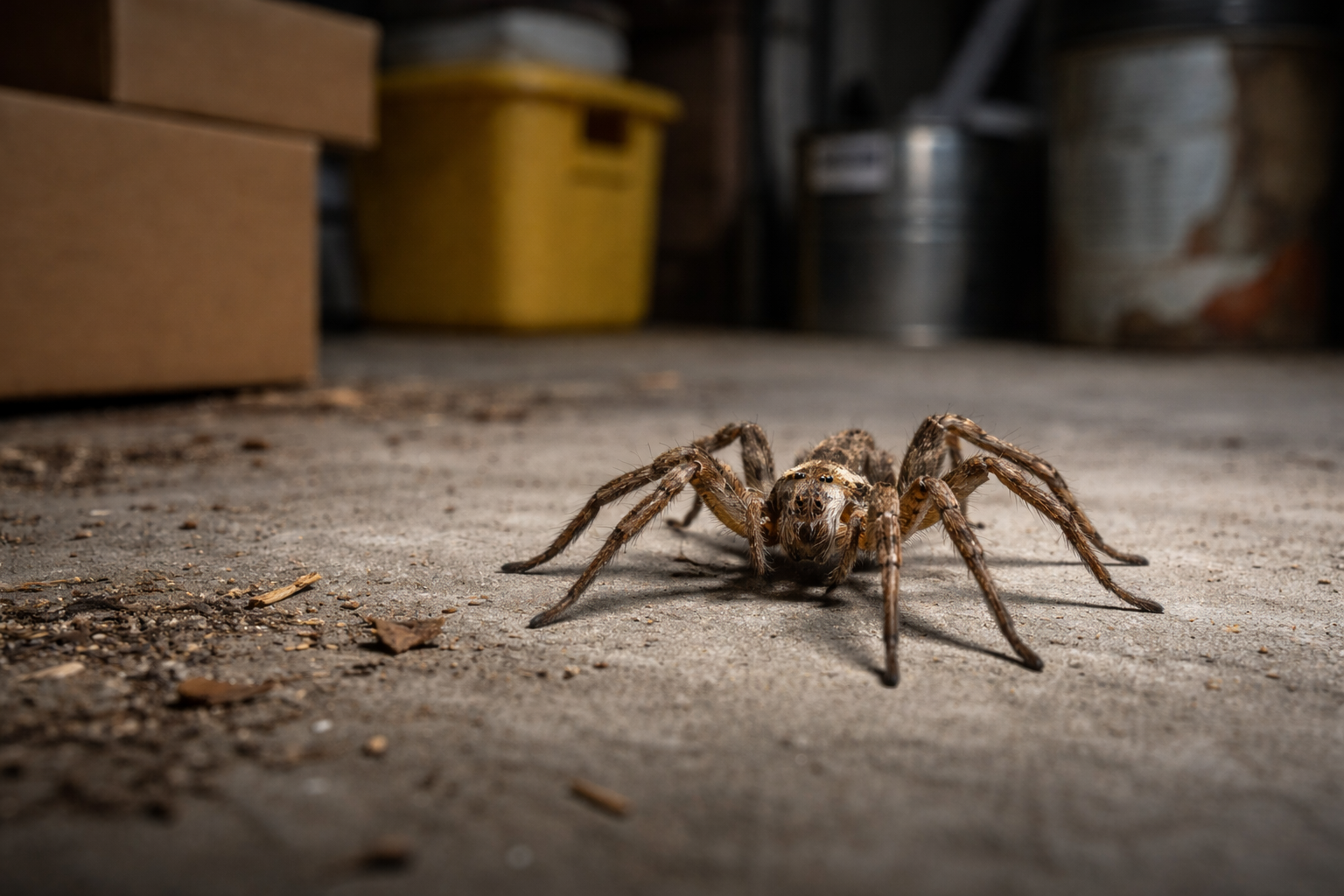
Wolf spiders are one of the most unsettling pests a homeowner can encounter. With their large, hairy bodies and fast, unpredictable movement, they tend to cause a strong reaction—despite not being a direct threat to humans.
Here’s what you need to know about wolf spiders, why they’re such an unwanted guest, and how to keep them out of your home.
What Makes Wolf Spiders Different?
Unlike most spiders that spin webs, wolf spiders are active hunters. They don’t wait for prey to come to them—they go looking for it. This behavior is part of what makes them more visible (and startling) to homeowners.
They’re commonly found in:
Basements
Garages
Crawl spaces
Under furniture
Around doors and windows
Outdoors, they live under debris, rocks, and mulch. But when temperatures drop—or prey becomes scarce—they’ll head indoors for warmth, moisture, and food.
Why They Make a Big Impact (Even Without a Bite)
While wolf spiders are not considered dangerous to humans, their size, speed, and appearance often lead to fear and discomfort. They can grow up to two inches long and are covered in short hairs, giving them a tarantula-like look. Their large eyes even reflect light in the dark, which can be unsettling during nighttime encounters.
Even more unnerving is their mobility. They move quickly and may appear to “chase” people. In truth, they’re trying to escape and sometimes head in the direction of shelter—often where you're standing.
How to Keep Wolf Spiders Out of Your Home
If you’re seeing wolf spiders indoors, it’s time to take preventative action. Here are a few steps homeowners can take:
1. Eliminate Entry Points
Seal cracks in the foundation, windows, and doors
Install weather stripping and door sweeps
2. Reduce Indoor Attractants
Use a dehumidifier in damp areas
Store items in sealed containers off the ground
Declutter storage spaces, especially in basements and garages
3. Maintain a Clean Exterior
Keep firewood and debris away from your home’s foundation
Trim vegetation and remove leaf piles that serve as shelter
4. Limit Prey Inside the Home
Since wolf spiders follow other pests like ants and flies, addressing insect issues reduces their food supply—and reason to stay.
When to Call the Professionals
If wolf spiders are making frequent appearances in your home, or if DIY methods aren’t solving the issue, it’s time to call in pest control professionals. At Clements Pest Control, we:
Conduct thorough interior and exterior inspections
Identify entry points and attractants
Use targeted treatments to remove spiders and their food sources
Offer ongoing protection plans to prevent future issues
Our team uses safe, effective products and solutions tailored to your home and comfort level.
Have a wolf spider problem—or want to prevent one?
Schedule your free pest inspection by calling
(772) 562-6450
today.