
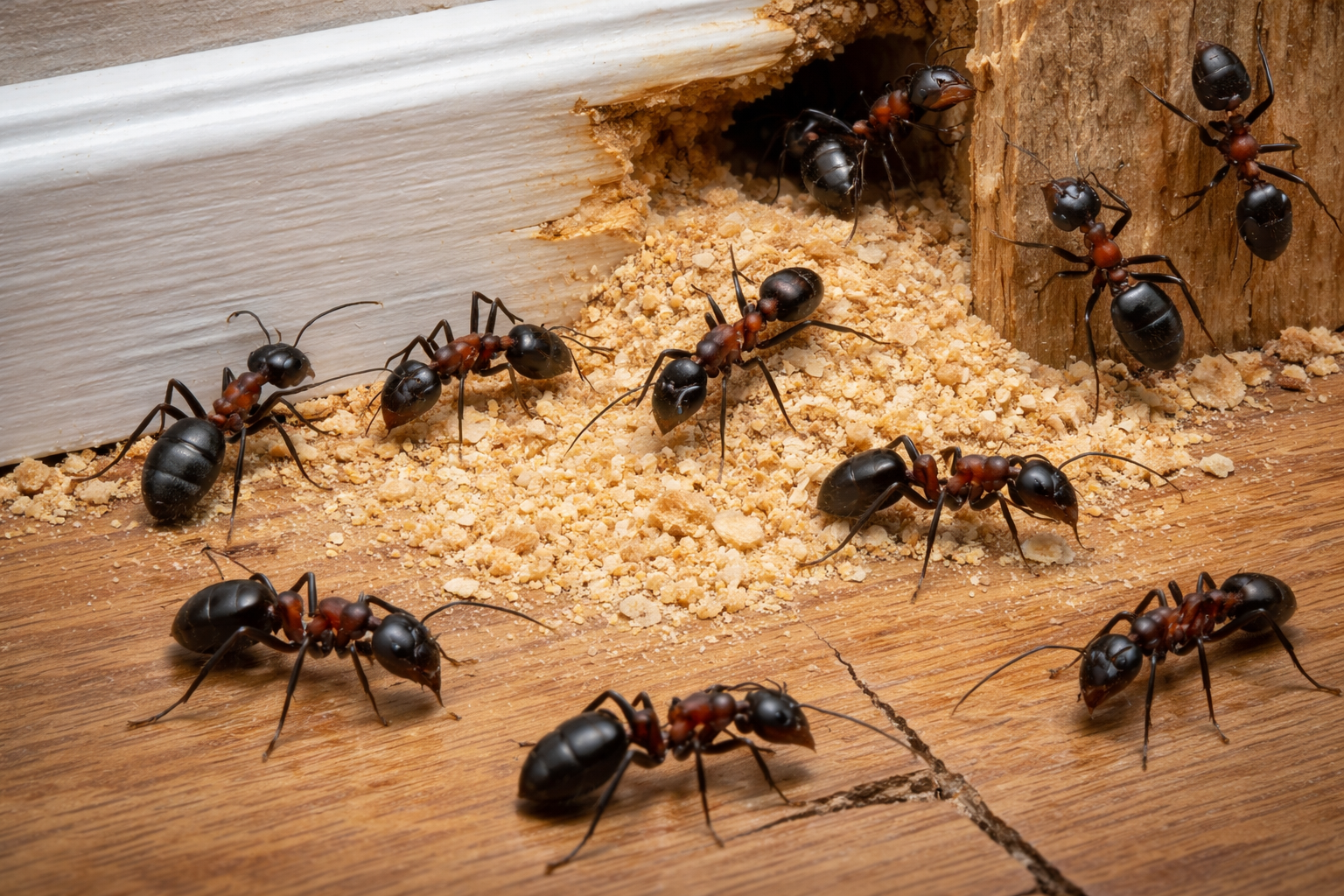
6 Telltale Signs of a Carpenter Ant Infestation (And What to Do About It)
Carpenter ants aren’t just annoying—they can quietly wreak havoc on your home’s structure. Unlike termites, they don’t eat wood, but they tunnel through it to build nests. Left unchecked, this behavior can lead to costly damage.
The good news? Spotting the signs early can save you serious headaches (and repair bills).
What Are the Warning Signs of Carpenter Ants?
1. Small Piles of Sawdust (Frass)
Carpenter ants push out wood shavings and debris as they burrow. If you notice small, unexplained piles of sawdust near baseboards, window sills, or crawl spaces, that’s a red flag.
2. Smooth, Hollowed Wood
Carpenter ants carve out clean, polished tunnels in wood. Unlike termites, they don’t leave mud or jagged damage. Check around damp or water-damaged wood near sinks, basements, or crawl spaces.
3. Winged Ants Near Windows
Spotting large, winged ants indoors—especially near windows or crevices—is a strong indicator of a mature colony preparing to expand.
4. Faint Rustling Sounds
At night, you might hear soft tapping or rustling sounds in your walls. This could be worker ants moving through wooden beams or wall voids.
5. Tiny Entry Holes in Wood
Look closely at wooden beams, baseboards, and window frames. Carpenter ants enter through small openings, especially in moist or softened wood.
6. Indoor and Outdoor Ant Trails
These ants use scent trails to move between food sources and nests. Watch for lines of ants along walls, countertops, or near outdoor woodpiles and tree stumps.
How to Prevent Carpenter Ants From Invading Your Home
Address Moisture Problems First
Fix roof or pipe leaks and remove any water-damaged wood—these are prime nesting sites.Seal Entry Points
Use caulk to close gaps around doors, windows, vents, and your home’s foundation.Eliminate Food Sources
Keep food sealed and surfaces clean. Don’t leave pet food out overnight.Trim Vegetation and Remove Woodpiles
Keep branches, firewood, and mulch away from your foundation to eliminate easy pathways into your home.
Why You Should Act Quickly
Carpenter ants don’t nibble on the surface—they hollow out structural wood from the inside. Left untreated, their colonies (especially satellite nests) can compromise the safety of beams, joists, and flooring.
When to Call in the Pros
While DIY fixes may hold off an invasion temporarily, a true infestation requires professional treatment.
A pest control expert can:
Locate primary and satellite nests
Identify key entry points
Apply safe, targeted treatments
Create a plan to prevent future infestations
At Clements Pest Control, we specialize in eliminating carpenter ants throughout Florida. We tailor our approach to your home’s specific vulnerabilities—so you stay protected year-round.
Book your inspection today and stop carpenter ants before they cause costly damage.