
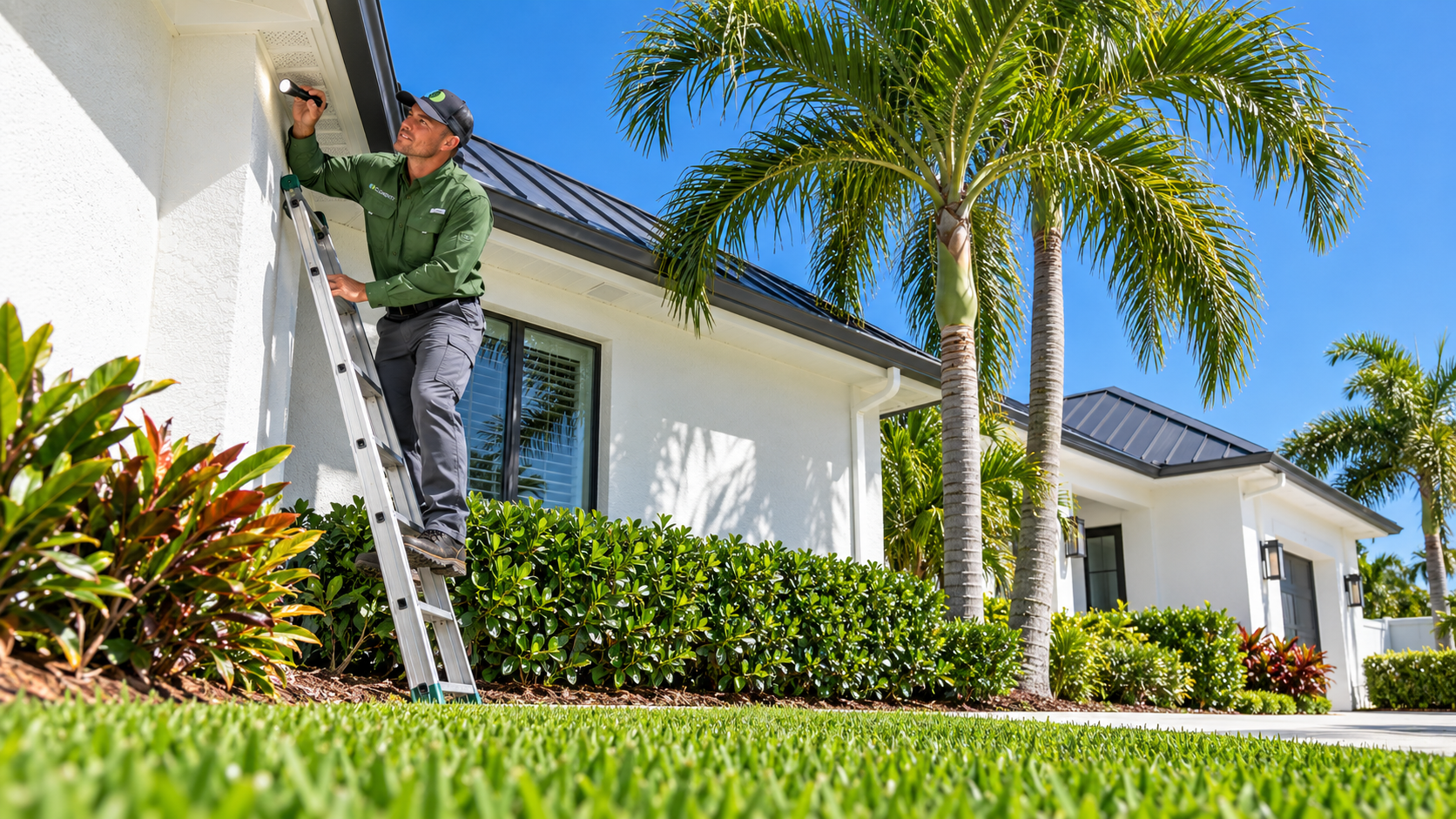
Most do-it-yourself rodent sealing fails for three reasons: the materials do not hold up, the real entry points get missed, or the house gets sealed while rodents are still inside. In Florida, roof rats can slip through a gap about half an inch wide, and house mice need only about a quarter inch, roughly the width of a pencil. Expanding foam on its own gets chewed through, and many of the openings that matter most are up at the roofline. If you want a quiet house by Thanksgiving, early November is a good time to get exclusion right.
Why Florida Homes Give Rodents So Many Options
When people picture a rat problem, they often think of a rodent burrowing in at ground level. In much of Florida, the more common culprit is the roof rat, and it is a climber. Roof rats travel along palm fronds, oak limbs, fences, and utility lines, then step right onto the roof.
That changes where the problem starts. Florida homes have a lot of openings up high:
Gaps where a roof line meets a lower wall
Open ends on tile roofs
Loose or damaged soffit panels
Gable and attic vents without sturdy screening
Spots where AC lines, plumbing, or cables pass through the wall
Cooler nights in the fall do not create rodents, but they do tend to make a warm attic more appealing. That is one reason November is a smart time to deal with this, rather than waiting until you hear something overhead. Our earlier post on how rodents get into Florida homes as nights cool walks through these entry points in more detail.
The Materials Problem
Most failed DIY repairs come down to what was used to close the gap.
Expanding foam alone is the most common one. It fills a hole nicely, but rodents chew through it without much trouble. A patch of foam can look fine from the ground while a fresh hole sits right next to it.
Steel wool is better than foam, but it is not a permanent fix on its own. In humid, salty coastal air, it can rust and loosen over time.
Caulk and window screen work for tiny cracks and insects, not rodents. Rats and mice can chew or push through both.
What holds up are materials rodents cannot chew, such as hardware cloth, sheet metal, flashing, and mortar. The key is that they are cut to fit, fastened securely, and sized to the opening. A material that is right for a soffit gap may be wrong for a roof vent.
The Gaps You Cannot See From the Ground
Even a careful homeowner usually seals what they can reach: the garage door, the dryer vent, a gap under the kitchen sink. Those are worth closing, but they are often not where roof rats are getting in.
A thorough check runs from the roofline to the foundation and includes the attic itself. Signs worth looking for include:
Dark rub marks along beams, pipes, or entry points
Droppings about half an inch long with pointed ends (roof rats) or much smaller rod-shaped droppings (mice)
Chewed wires, insulation tunnels, or nesting material
Scratching or scurrying at night, especially soon after dark
If you only find droppings in the garage, the rodents may still be coming in somewhere else entirely.
Sealing Too Early Can Backfire
This is the mistake that surprises people the most. If rodents are already living in the attic or walls, sealing every opening traps them inside.
A trapped rat does not give up. It will often chew a new way out, sometimes through a soffit, ceiling, or wire. If it dies in a wall void, the odor can last for weeks and the source can be hard to reach.
The right order is to confirm whether rodents are inside, remove them, then close the house up. Getting that order right is a big part of what separates lasting exclusion from a patch that fails in a month.
What Lasting Rodent Exclusion Takes
There is no single trick here. Rodent exclusion works when several things go right together:
A full inspection of the roofline, walls, foundation, and attic
Removing the rodents already inside before the final sealing
Durable materials matched to each opening
Follow-up to confirm activity has stopped
Miss one and the rodents usually find a way back. That is why many Florida homeowners end up calling a professional after a weekend of patching that did not hold.
Easy Steps That Help Right Now
While exclusion handles the structure, a few simple habits make your property less inviting:
Trim tree limbs and palm fronds back from the roof.
Pick up fallen citrus and other fruit from the yard.
Store pet food and birdseed in sealed containers.
Keep the garage door closed at night.
Clear clutter in the garage and attic so you can spot droppings early.
Questions Florida Homeowners Ask About Rodent Exclusion
Can rats chew through spray foam?
Yes. Foam alone is easy for rats to chew. It should not be the only material in a gap rodents are using.
Does steel wool keep rats out?
It helps short term, but it can rust and loosen in Florida humidity. Long-lasting repairs use chew-proof materials that are fastened in place.
Should I seal my house before or after trapping?
After. Sealing first can trap rodents inside, where they may chew new openings or die in a wall.
How do I know if rodents are getting in through the roof?
Noises overhead soon after dark, droppings or rub marks in the attic, and tree limbs touching the roof are all strong clues.
Is it worth doing before the holidays?
Yes. Fixing entry points now usually means a calmer house when family arrives, and less chance of finding droppings in stored decorations.
How Clements Pest Control Can Help
Clements has helped Florida families with rodents since 1961, and rodent exclusion is part of how we handle them. That means inspecting your home from the roof to the foundation, dealing with any rodents already inside, and sealing entry points with materials built to hold up in our climate.
If you live in Stuart, Palm City, Jensen Beach, Hobe Sound, or nearby Port St. Lucie, our Stuart rodent control team can take a look before the holidays. You can also learn more about pest control across the Treasure Coast and South Florida or our rodent control services.
We also serve homeowners through our Vero Beach rodent control, Orlando rodent control, and Naples rodent control teams.
Hearing something in the attic, or just want peace of mind before guests arrive? Contact Clements or call 772-562-6450 to schedule a rodent inspection.