
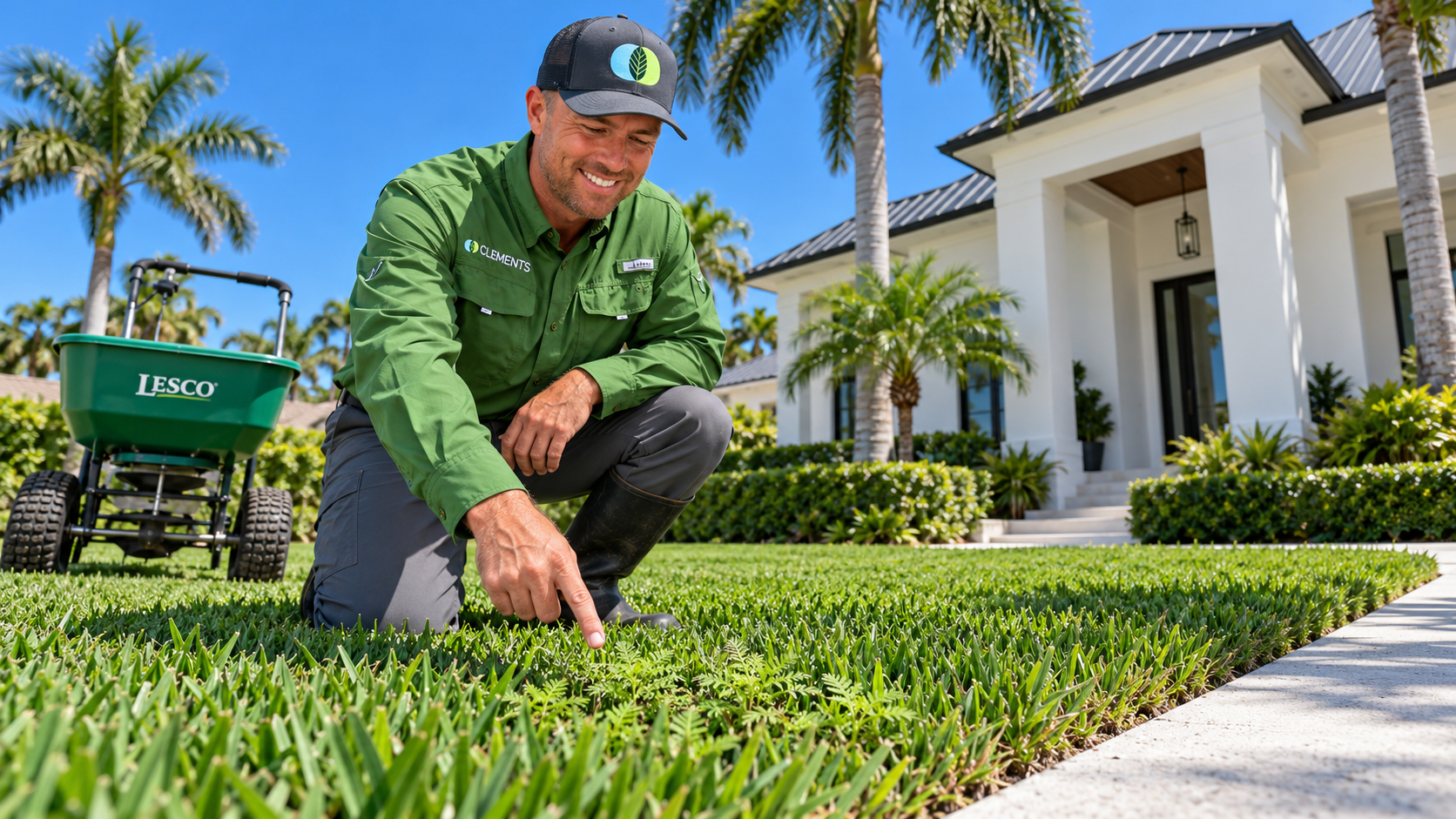
If winter weeds are already coming up in your lawn, you still have good options. Young weeds are much easier to control than mature ones, so the next several weeks matter. The goal now is to treat weeds while they are small and actively growing, before lawn burweed forms its sharp burs and before weeds start setting seed for next year. Pre-emergent products will not help with weeds you can already see, and many weed killers can injure St. Augustine grass in warm Florida weather, so choosing the right approach matters as much as the timing.
How Winter Weeds Got Here
Winter weeds start growing when Florida nights cool off. Once overnight lows settle around the mid to upper 50s for several nights in a row, seeds already in the soil begin to sprout. In Central and South Florida, that usually happens sometime from late October into November, though it varies from year to year and yard to yard.
At first, these weeds are small, low, and easy to overlook. Many homeowners do not notice them until late winter, when they are bigger and harder to control. As we covered in our October post on why Florida lawn stickers start in fall, the weeds you notice in spring often began growing months earlier.
In Southwest Florida, warm spells can stretch well into November, so seeds may sprout in waves rather than all at once. That means a lawn can have tiny seedlings, bigger plants, and bare soil waiting for more seeds, all at the same time.
If you are seeing small seedlings now, you are actually ahead of most people.
The Winter Weeds Florida Homeowners See Most
Lawn burweed: Low and feathery with parsley-like leaves. Harmless looking now, but it develops spiny burs as it matures in late winter and spring.
Annual bluegrass: Light green clumps that stand out against darker turf, often in thin or shady spots.
Chickweed and henbit: Low, spreading weeds that fill in bare areas.
Carolina geranium and hop clover: Common in thinner lawns and along edges.
If your stickers show up in summer instead, you are likely dealing with sandspurs, which follow a different calendar. The advice here is for the cool-season weeds.
Why Pre-Emergent Will Not Help Now
Pre-emergent products work by stopping seeds from becoming plants. Once a weed has sprouted, a pre-emergent does nothing to it.
That does not make it useless for the rest of the season. In some lawns, new seeds keep germinating over several weeks. Still, if you can already see weeds, those plants need a different kind of control.
What Still Works on Young Weeds
This is where many DIY efforts go wrong. Post-emergent weed control can work well on young winter weeds, but a few things have to go right:
The weeds need to be small and actively growing. Seedlings take up treatment far better than mature plants.
The product has to be safe for your grass. Many common weed killers can damage or kill St. Augustine, which is the most common lawn grass in Southwest Florida. Products that are fine on one type of grass can harm another.
Temperature matters. Some treatments can stress turf when the weather is warm. In Southwest Florida, warm days can stretch well into the cool season, so timing needs to fit the actual forecast, not the calendar.
Burweed has a deadline. The real turning point for burweed is when it forms its burs. Treating before that point is far more effective, and much more comfortable for anyone walking barefoot.
Weed-and-feed products can be tempting, but the right time to feed your lawn and the right time to treat weeds are set by different things. A combination product has to match both, which is hard to do.
What Does Not Work
Mowing lower: Most winter weeds grow close to the ground, so mowing will not remove them. Cutting St. Augustine too short also weakens it.
Waiting for spring: By then, burweed burs and seed production are underway.
Heavy fertilizing: Pushing extra growth into warm-season grass in the cool months can create other problems, like lawn disease, without fixing weeds.
Thick Grass Is Your Best Long-Term Defense
Winter weeds take advantage of thin, stressed, or bare spots. A dense, healthy lawn leaves them far less room. Mowing at the right height for your grass, watering in the early morning only when needed, and addressing pest damage or disease all help.
For a few scattered weeds, pulling them by hand after rain or irrigation works fine. For a whole lawn, you will usually need a planned approach.
Questions Florida Homeowners Ask About Winter Weeds
Is it too late to do anything about winter weeds?
No. Young weeds can often still be controlled. The key is acting before they mature and before burweed forms burs.
Will weed killer hurt my St. Augustine grass?
It can. Many common products are not safe for St. Augustine, especially in warm weather. Always check the label for your grass type.
Why do I get stickers every year?
Weeds that set seed each spring refill the soil with seeds, so the cycle repeats unless it is interrupted.
Should I use a weed and feed?
Feeding and weed control are timed by different factors, so combination products are hard to time correctly in Florida.
Why do weeds keep coming back in the same spots?
Thin, shady, or worn areas give weeds room to grow, and the seeds they leave behind sprout there again the next fall.
Can I just pull them?
For a few weeds, yes. For widespread weeds, hand pulling usually cannot keep up.
How Clements Pest Control Can Help
Clements has been caring for Florida lawns since 1961, and our lawn care program is built around Florida grasses, Florida weeds, and Florida weather. Our technicians know which treatments are safe for your turf and how timing shifts from one part of the state to another.
If you live in Naples, North Naples, Bonita Springs, Estero, or Golden Gate, our Naples lawn care team can help you get winter weeds under control before burweed season. You can also learn more about Clements services across Southwest Florida or our Florida lawn care services.
We also serve homeowners through our Vero Beach lawn care, Stuart lawn care, and Orlando lawn care teams.
Seeing weeds pop up already? Contact Clements or call 772-562-6450 to schedule a lawn evaluation.