
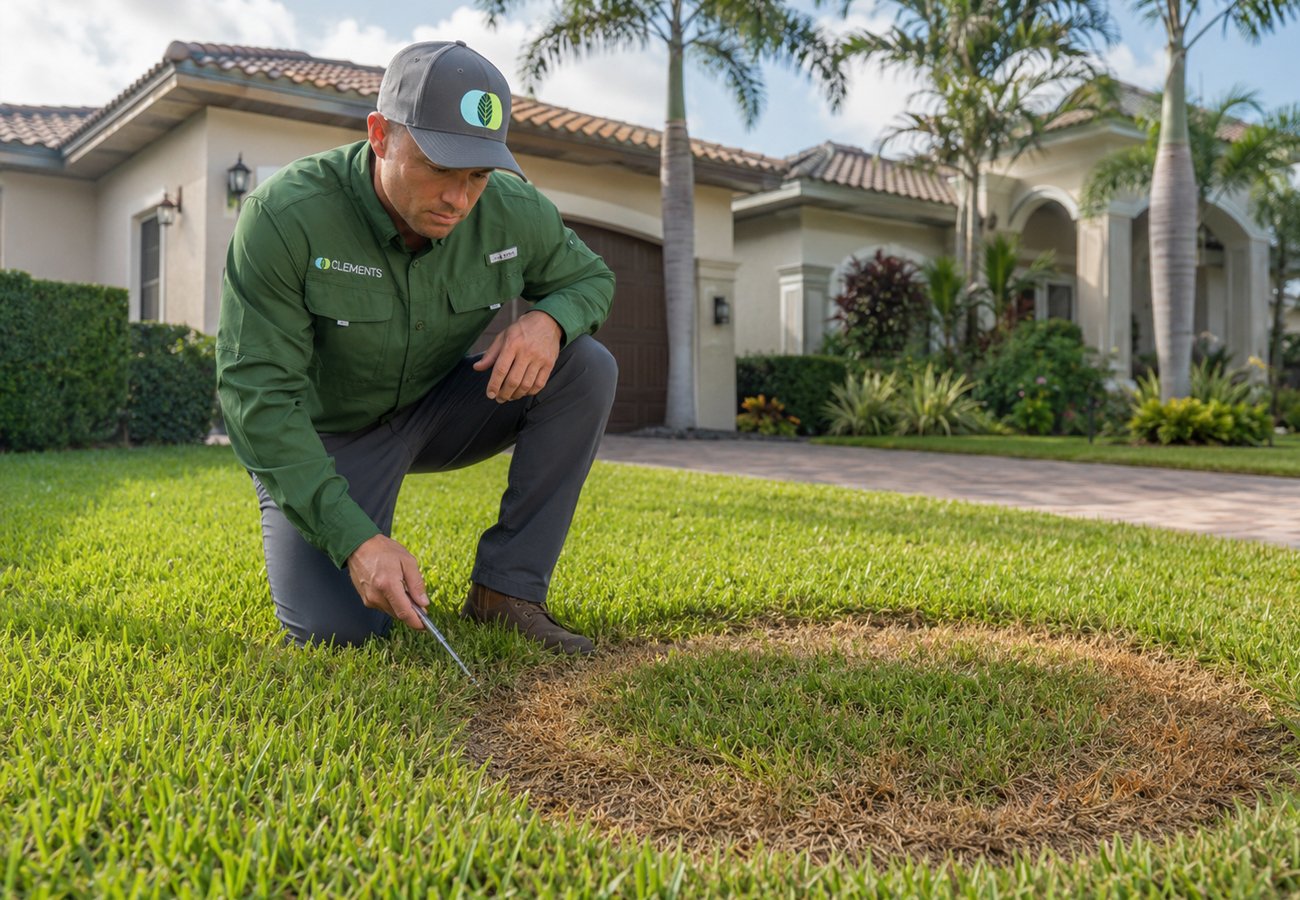
If your lawn looks worse the deeper you get into summer, you are not imagining it. Around Orlando and across Central Florida, the season brings a steady stretch of heat and humidity that turns a green, healthy yard into a target for fungus. The problem often shows up as brown rings, thinning patches, or spotted blades, and it tends to appear right after a run of muggy, stormy days.
Humidity is the part homeowners tend to overlook. Most people know that heavy rain can cause problems, but the moisture hanging in the air matters just as much. When the humidity stays high overnight, grass blades never fully dry, and that constant dampness is what lets fungal disease take hold and spread.
This guide explains how Florida's humid summers fuel lawn fungus, what to watch for around your home, and the practical steps that keep your grass strong when conditions turn against it.
Why Humidity Is So Hard on Central Florida Lawns
Fungal spores live in nearly every lawn all year long. They stay harmless until the environment gives them what they need, and a humid Florida summer delivers it in full. The combination that tips spores into active disease is warmth plus prolonged moisture, and Central Florida has both in abundance from roughly June through September.
Here is the piece that surprises people. It is not only the rain. High humidity keeps the air saturated, so dew forms earlier in the evening, lingers later into the morning, and the grass canopy simply does not get a chance to dry out. When blades stay wet for long stretches, especially overnight, fungus has the window it needs to grow.
Orlando's inland location adds to the challenge. Without a steady coastal breeze to move the air, humidity settles over lawns and stays put, particularly in shaded areas, low spots, and yards with dense landscaping. Those pockets of trapped moisture are usually where fungus appears first.
St. Augustine grass, the most common turf across Central Florida, makes the situation trickier still. Its thick, spreading growth holds humidity close to the soil surface, right where fungus prefers to establish itself.
How Humidity Turns Into Lawn Disease
It helps to think of lawn fungus as a chain reaction rather than a single event. Humidity is what keeps the chain going.
First, warm days and humid nights keep the grass canopy damp. Then, afternoon storms add more water on top of soil that never fully dried from the day before. On top of that, common watering habits like running sprinklers in the evening leave blades wet right when humidity is climbing. Each of these alone is manageable. Stacked together through a Central Florida summer, they create the constant moisture that fungal disease depends on.
This is why a lawn can look fine in May and struggle by July. The disease pressure builds as the humid season settles in, and once fungus is active, it can spread across a yard in a matter of days.
Warning Signs to Watch For
Because humidity related fungus can look like other lawn problems, it pays to know what sets it apart. A few signs point toward disease rather than drought, heat stress, or insects:
Damage appears in rings, circles, or irregular patches instead of following the sunniest areas
Spots or lesions show up on individual grass blades
The trouble worsens right after humid, rainy stretches
Grass keeps browning or spreading even when you water correctly
Affected grass pulls up easily, or the roots and runners look dark and rotted
If the browning is concentrated in the hottest, sunniest parts of the yard and creeping outward, insects may be the real culprit. Chinch bugs and fungus are two of the most commonly confused lawn problems in Florida, and our guide on stopping chinch bug damage before it kills your lawn walks through how to tell the difference. It also helps to know whether you are looking at a stressed lawn or a pest damaged one, since the fix is different for each.
For a closer look at the specific diseases behind those symptoms, our breakdown of summer lawn fungus in Florida and how to cure it covers brown patch, gray leaf spot, and take-all root rot in detail.
Practical Ways to Keep Fungus in Check
The goal in a humid climate is simple: give your grass every chance to dry out and stay strong enough to resist disease. A few habits make a real difference.
Water early, and only when needed
This is the single most important change. Water deeply but infrequently, and always in the early morning so the grass has the whole day to dry before humidity climbs again. Avoid evening and nighttime watering, which leaves blades wet through the most humid hours. During the rainy season, scale back or shut off irrigation entirely, since storms are usually providing more than enough. Follow the watering restrictions for your area as well.
Mow smart and manage thatch
Mow at the correct height for St. Augustine grass with a sharp blade, and never remove more than a third of the blade at once. Keeping thatch under control helps the surface dry faster and removes a layer where fungus thrives. Better airflow near the soil is one of the easiest ways to make a lawn less hospitable to disease.
Improve airflow where humidity collects
Trim back overgrown shrubs and low branches that trap moisture and block air movement, especially in shaded corners and along fence lines. Opening those areas up helps humidity disperse instead of settling over the grass.
Ease off heavy nitrogen in summer
Quick release, high nitrogen fertilizer pushes soft, tender growth that fungus loves, and it makes some diseases noticeably worse during the humid months. Feed in a way that builds resilience rather than inviting problems, and save heavy feeding for when the weather cools and disease pressure drops.
Prevention Beats Treatment
The best defense against humidity driven fungus is a lawn healthy enough to shrug it off. Strong, well maintained turf resists the pressure that overwhelms a stressed yard. Consistent early morning watering, smart mowing, good airflow, and balanced feeding all add up to grass that stays green through the muggiest weeks of the year.
It is also worth remembering that thinning, diseased turf changes the environment around your home and can invite other pests. A weak lawn is often the starting point, which is one more reason to keep your grass in good shape. If armyworms or other lawn pests are also in the picture, our article on how armyworms can destroy a Florida lawn in 48 hours shows how quickly turf trouble can escalate during summer.
Questions Orlando Homeowners Ask About Lawn Fungus
Does humidity really cause lawn fungus, or is it the rain?
Both play a role, but humidity is the factor people underestimate. High humidity keeps grass blades damp overnight and slows how fast the lawn dries after rain. That extended moisture is what allows fungal spores to become active and spread, so a humid summer can drive disease even between storms.
What month is lawn fungus worst around Orlando?
The humid rainy season, generally June through September, is the toughest stretch for Central Florida lawns. That is when heat, humidity, and frequent storms combine to give fungus everything it needs. Outbreaks often appear within days of a long, muggy spell.
Can I stop lawn fungus without chemicals?
Good cultural habits go a long way. Early morning watering, proper mowing, thatch control, and better airflow all reduce the moisture fungus depends on and can prevent many outbreaks. Once a disease is active and spreading, though, correcting the conditions is not always enough on its own, and targeted treatment may be needed.
Will my lawn recover from fungus on its own?
Sometimes, if the weather dries out and the grass is otherwise healthy. But many summer diseases keep spreading until the underlying moisture problem is corrected, and some, like take-all root rot, rarely resolve without help. Catching it early gives the lawn the best chance to bounce back.
Is professional lawn care worth it in a humid climate?
For many Central Florida homeowners, yes. The common summer diseases look alike but respond to different treatments, and humidity keeps the pressure on for months. A professional can confirm what is happening, treat it correctly, and help build turf strong enough to handle the season.
How Clements Pest Control Can Help
Humidity is a fact of life during a Central Florida summer, and it will keep working against your lawn for months at a time. The good news is that the right care makes your grass far more resilient, and catching disease early keeps a small patch from spreading across the whole yard.
At Clements Pest Control, our lawn care program is built to diagnose the real cause of turf trouble, treat fungal disease at its source, and strengthen your grass so it can stand up to the heat and humidity ahead. Homeowners across Orlando and Central Florida count on us for lawn care along with pest control, termite protection, rodent control, and mosquito control, so the whole property stays protected. We also serve the Treasure Coast and Southwest Florida, including Vero Beach, Stuart, and Naples.